



Small Cat Spotlight: Iberian Lynx

By Panthera

Iberian lynx
© Sebastian Kennerknecht

Slipping silently through dense Mediterranean scrub, a rare and breathtaking wild cat scans the undergrowth for movement. Once teetering on the edge of extinction, the Iberian lynx has become the centerpiece of one of conservation's greatest modern success stories.

Description

The Iberian lynx (Lynx pardinus) is the smallest of the four lynx species, weighing between 20 and 33 pounds (9-15 kilograms), roughly the same size as a Canada lynx (Lynx canadensis) or bobcat (Lynx rufus). What it lacks in size, it more than makes up for in striking appearance. Like all lynx, it carries the hallmarks of the genus: tufted black ears, a short tail with a black tip and long legs built for agility. The Iberian lynx is distinguished by its small, rounded head, short body and a boldly spotted coat that sets it apart from its cousins.

Distribution and Habitat

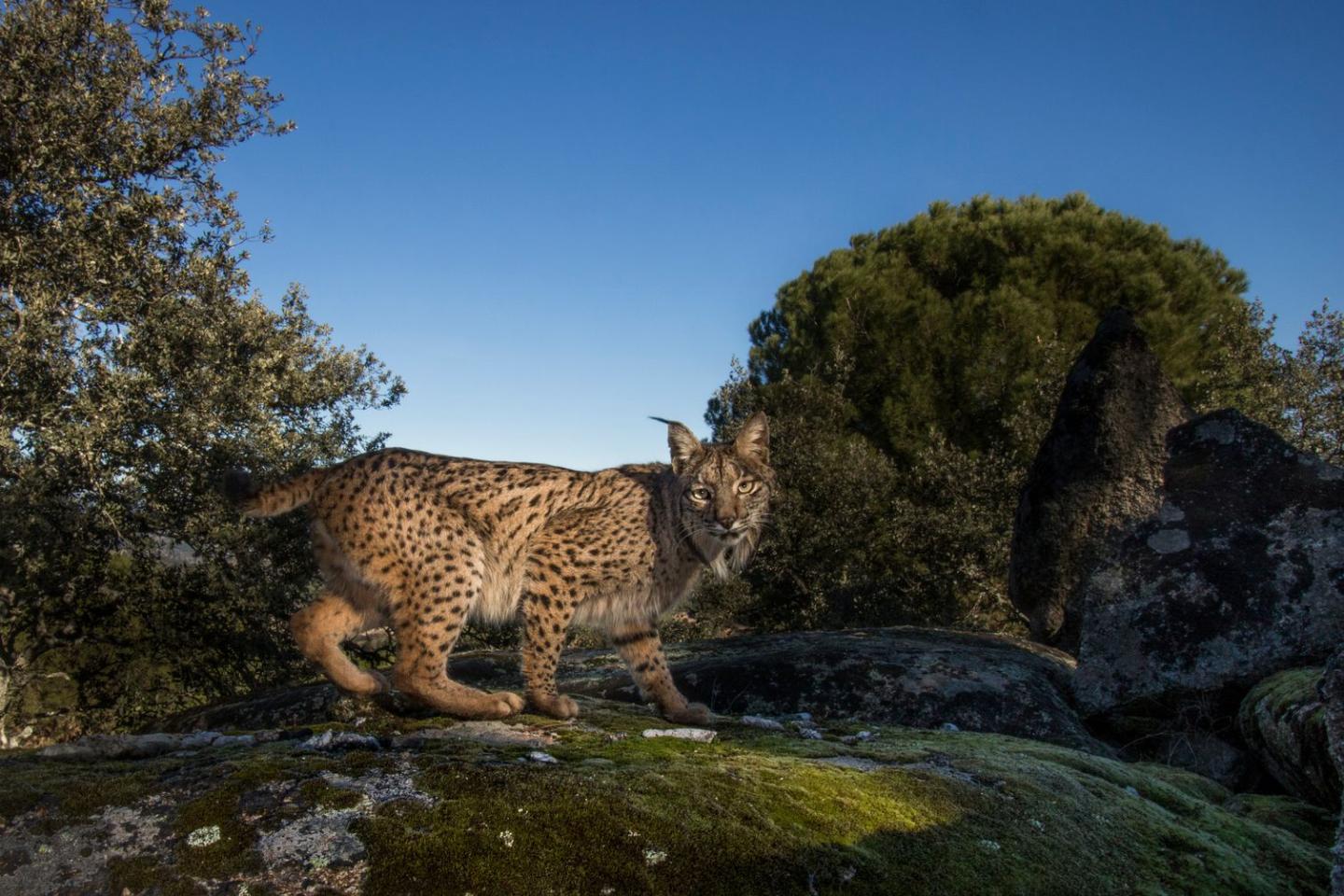
Iberian lynx in Spain
Iberian lynx in Sierra de Andujar Natural Park, Andalusia, Spain . © Sebastian Kennerknecht 

The Iberian lynx is endemic to the Iberian Peninsula, calling Spain and Portugal home. It hunts primarily in Mediterranean forests and shrublands, where dense vegetation provides cover for stalking prey. Unlike the wide-ranging Eurasian lynx, which stretches across much of Europe and central Asia, the Iberian lynx has always had a relatively restricted range, which made habitat loss all the more devastating.

Ecology and Behavior

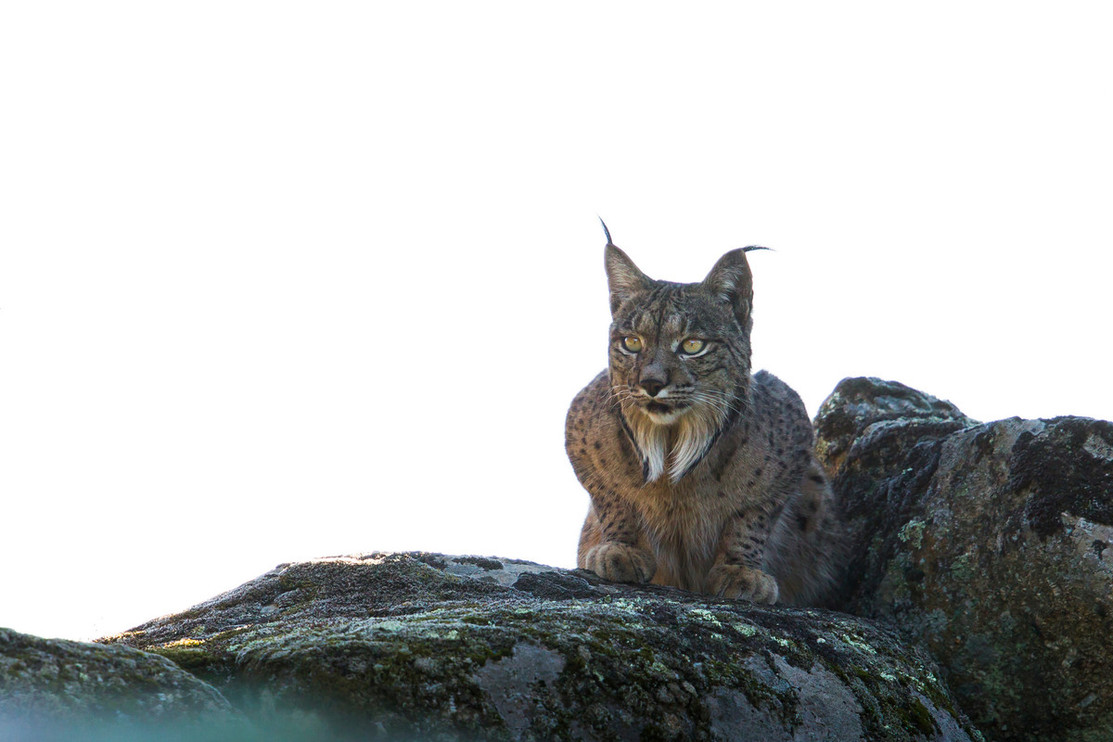
Iberian lynx crouching on a rock
Iberian lynx in Sierra de Andujar Natural Park, Andalusia, Spain . © Sebastian Kennerknecht 

The Iberian lynx is a highly specialized predator, with European rabbits (Oryctolagus cuniculus) making up the overwhelming majority of its diet. This dietary dependence is both a defining ecological trait and a profound vulnerability: When rabbit populations crash, as they have repeatedly due to disease, lynx survival and reproduction follow. In lean years, lynx may supplement their diet with ducks, young deer, rodents and other small mammals, but no substitute sustains them the way rabbits do.

Lynx are solitary and territorial, with males maintaining home ranges that can span 100 to 200 kilometers and overlap with the smaller territories of several females. Scent marking, vocalizations and scratch posts signal these boundaries to other lynx. Males and females come together only briefly during the winter breeding season, with cubs — typically two to three per litter — born in spring inside well-concealed dens in dense vegetation or hollow trees.

Iberian lynx are largely crepuscular and nocturnal, peaking in activity around dawn and dusk when rabbits are most active. They are stalking predators, relying on cover and patience rather than sustained speed. Mediterranean habitat structure is essential to their ecology, offering dense scrub for cover and open ground for hunting.

Recently, remote cameras in central Spain captured female lynxes soaking dead rabbits in water — the first time this behavior has been recorded in any carnivore.

"This points to problem-solving behavior," says Wai-Ming Wong, Director of Panthera's Small Cats Program. "The lynx is not just reacting but potentially experimenting with a new way of handling food."

Researchers believe the behavior may be spreading through family groups and could become increasingly important as rising temperatures put greater pressure on lynx cubs in warmer, drier conditions.

Threats

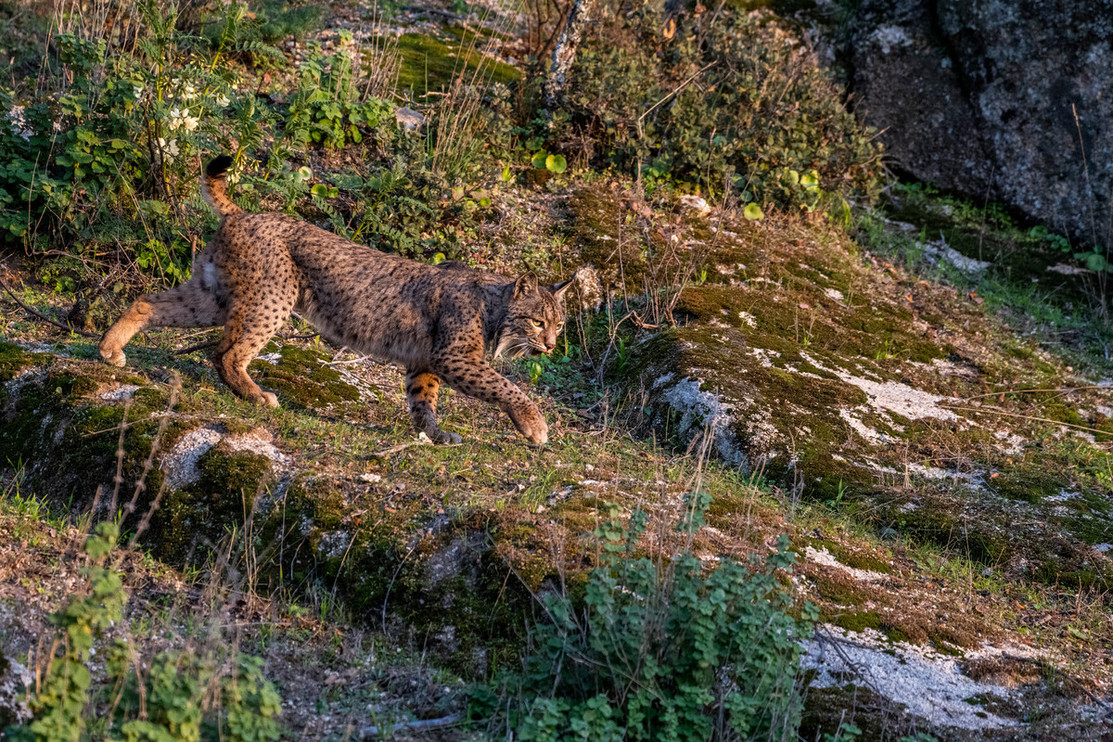
An Iberian lynx and her cub
An Iberian Lynx mother with her 21-month-old kitten. © Sebastian Kennerknecht

Just a few decades ago, the Iberian lynx was the most endangered wild cat on Earth. By the early 2000s, fewer than 100 individuals remained in the wild. Disease had decimated European rabbit populations, and habitat loss and overhunting compounded the crisis.

What followed was a coordinated, science-driven recovery program, led by the Spanish and Portuguese governments and supported by the European Union. The program used a conservation translocation strategy called reinforcement — breeding Iberian lynx in captivity and releasing them into the wild — alongside habitat restoration and prey base recovery across the Iberian Peninsula. The effort required sustained investment over decades, rigorous monitoring and collaboration across institutions and borders.

In 2024, the IUCN upgraded the Iberian lynx from Endangered to Vulnerable on the IUCN Red List of Threatened Species. This status shift represents one of the most significant recoveries ever recorded for a wild cat. Now with an estimated population exceeding 2,000, their growth over the past two decades stands as one of conservation's greatest success stories.

Hope for Wild Cats Everywhere

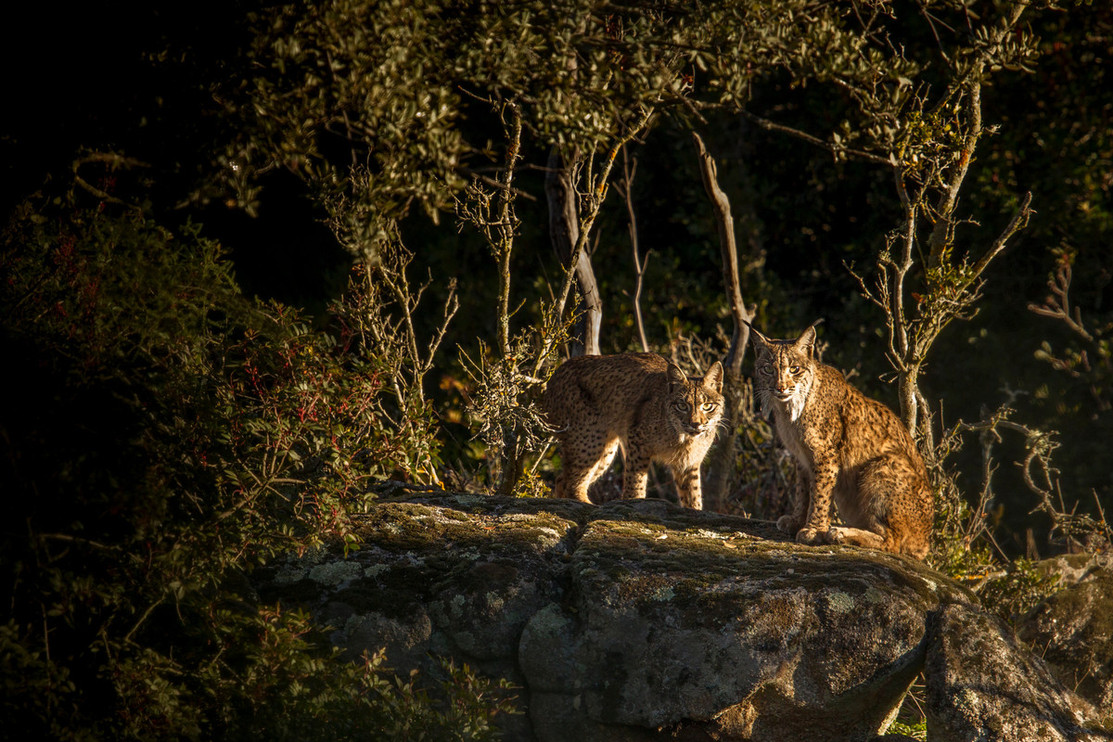
An Iberian lynx at sunset
A female Iberian lynx at sunset, Sierra de Andujar Natural Park, Andalusia, Spain. © Sebastian Kennerknecht

The Iberian lynx's comeback carries lessons that extend far beyond Spain and Portugal. Across Europe, conversations are accelerating about returning lynx to landscapes from which they have long been absent.

The practice of moving animals to restore wild populations has grown rapidly, and it has never held more promise for wild cats. Many populations have been cut off from each other by habitat loss, and conservation techniques have improved significantly in recent years.

Panthera's own scientists are contributing to that thinking. Axel Moehrenschlager, Director of the Small Cats Program and Conservation Translocation, sits on steering committees for the reintroduction of Eurasian lynx into England and of Scottish wildcats. He says the successful return of lynx species across Europe has laid the groundwork for reintroducing smaller wild cats in other regions.

Successful reintroductions do more than restore healthy ecosystems. They inspire people to care about conservation.

"Effective conservation translocations can counter environmental apathy," Moehrenschlager says. "In cultures where cats carry deep cultural meaning, their return offers something invaluable: hope."

Discover how Panthera's conservation translocation efforts are unfolding in Honduras, Saudi Arabia and Brazil. Learn more about Panthera's Small Cats Program and check out our full Small Cat Spotlight Collection.