


Wild Cats Are Worth Fighting For 

By Fred Launay, Ph.D.
Panthera CEO and President

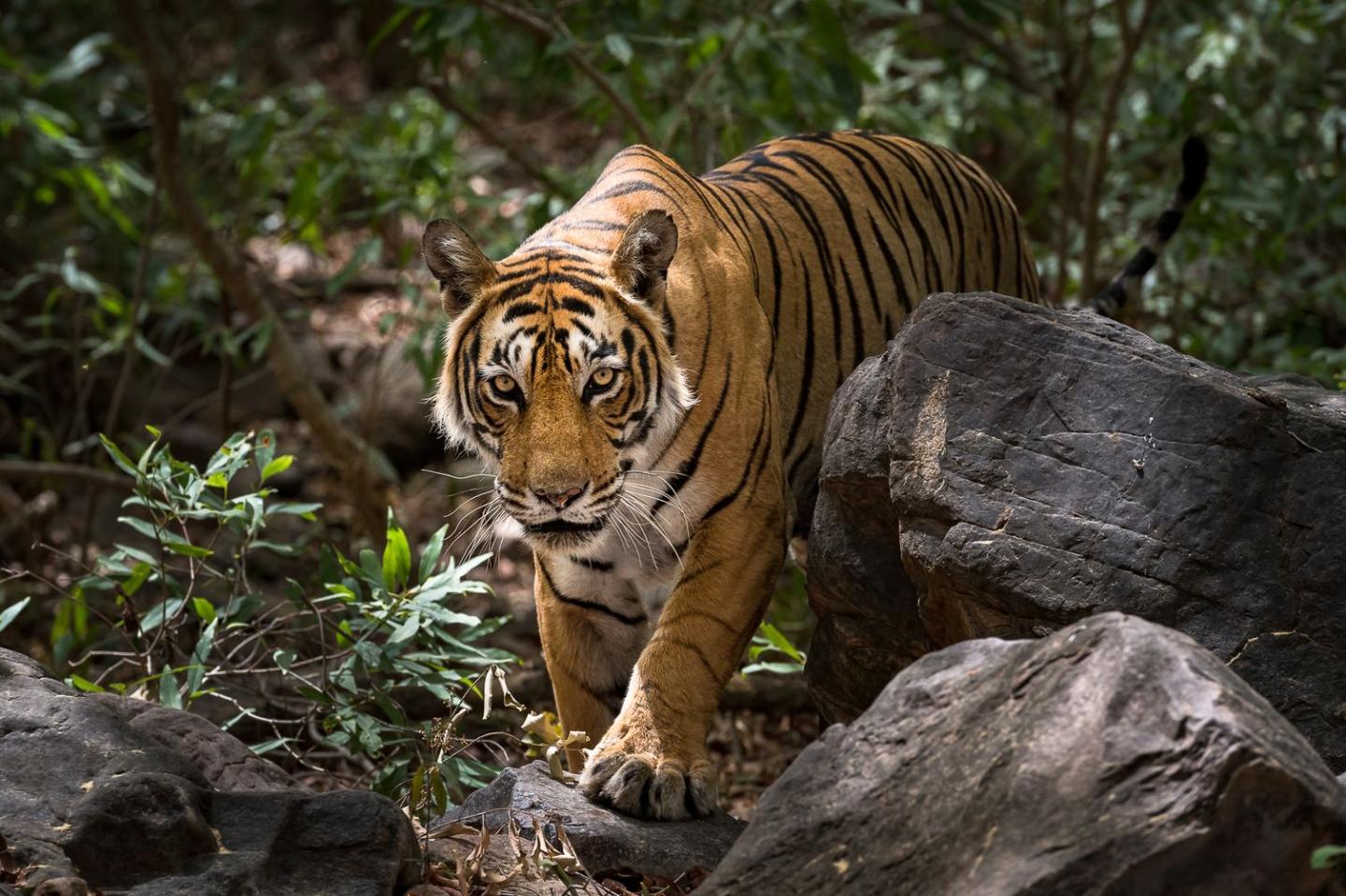
Tiger
© Karin Saucedo

For as long as humanity has told stories, wild cats have been woven into them. They appear in ancient art, sacred traditions and cultural symbols across continents — from tigers on Indus Valley seals dating to 2900 B.C. to leopards in imperial Chinese military symbolism to what many scholars believe is a fishing cat carved into the walls of Cambodia's Bayon Temple. Even today, they inspire us on screens, in stadiums and in the wild — places that still draw people from around the world. 
 
Yet many of these extraordinary species are in decline. Poaching, habitat loss and human-wildlife conflict are pushing wild cat populations toward a tipping point. Without action, we risk losing not only some of the world's most iconic species, but also the ecosystems, cultures and communities that have long coexisted with them. 
 
This is why Panthera exists. 
 
In 2006, we were founded on a bold belief many considered impossible: that the world's wild cats can be saved. For two decades, we have worked to secure a future for wild cats and the landscapes they inhabit.  
 
Along the way, both Panthera and wild cat conservation have changed profoundly. In our early years, we focused on big cats and built our reputation on the rigor of our research. Over time, it became clear that knowledge alone was not enough. Conservation requires action — directly in the field, at scale, and in partnership with governments, communities and rangers on the front lines. We transformed from studying wild cats to actively saving them, shifting toward applied, solution-oriented science and conservation interventions designed to produce measurable outcomes. 
 
When I joined Panthera as CEO in 2017, we expanded this vision even further. Alongside Board Chairman Jon Ayers, appointed in 2021, we broadened our strategy to encompass all 40 wild cat species — the majority of which are small cats and among the least studied animals on Earth.  
 
We continue to grow. In 2024, we established four regional hubs across Latin America, Europe, Africa and Asia to anchor our work at the local level.  
 
Today, Panthera has 44 active projects in 32 countries, 17 entities and more than 300 staff members dedicated to this mission. 
 
Innovation has always run through everything we do. While technology alone doesn't save cats, the right tools in the right hands make conservation more effective — from our first PantheraCam in 2008 to the cutting-edge carnivore deterrents our teams are developing and testing in the field today. 
 
Two decades in, we know this: conservation works. 
 
Tiger populations are stable or increasing at 88% of our Tigers Forever sites. In Senegal's Niokolo-Koba National Park, West African lion numbers have increased by approximately 200% since 2017 — a population that was once on the edge of local extinction. Collared peccaries are once again thriving in Honduras's Jeanette Kawas National Park, providing a stable food source for jaguars. In 2026, flat-headed cats were confirmed in Thailand for the first time in 29 years, including a mother and her cub. And our Furs for Life project has saved an estimated 7,500 wild cats, mostly leopards. 
 
These results are a testament to the dedication of people around the world who believe in this mission: rangers protecting critical landscapes, communities choosing coexistence, and conservation supporters who stay the course. While people can be the greatest threat to wild cats, we are also their greatest hope. 
 
At the heart of our mission is a simple truth: when wild cats thrive, nature thrives. As apex carnivores, they maintain the balance of ecosystems, shape healthy forests, grasslands and wetlands and sustain the natural systems on which people depend. 
 
 Saving wild cats has never been only about cats. It is about the systems that sustain life on Earth — including our own. 
 
20 years. 40 species. One pride. 
 
You are part of what makes this possible, and I cannot wait to see what we accomplish together over the next 20 years.