


Joint Training Strengthens Ranger Skills and Collaboration Across Hwange

By Panthera

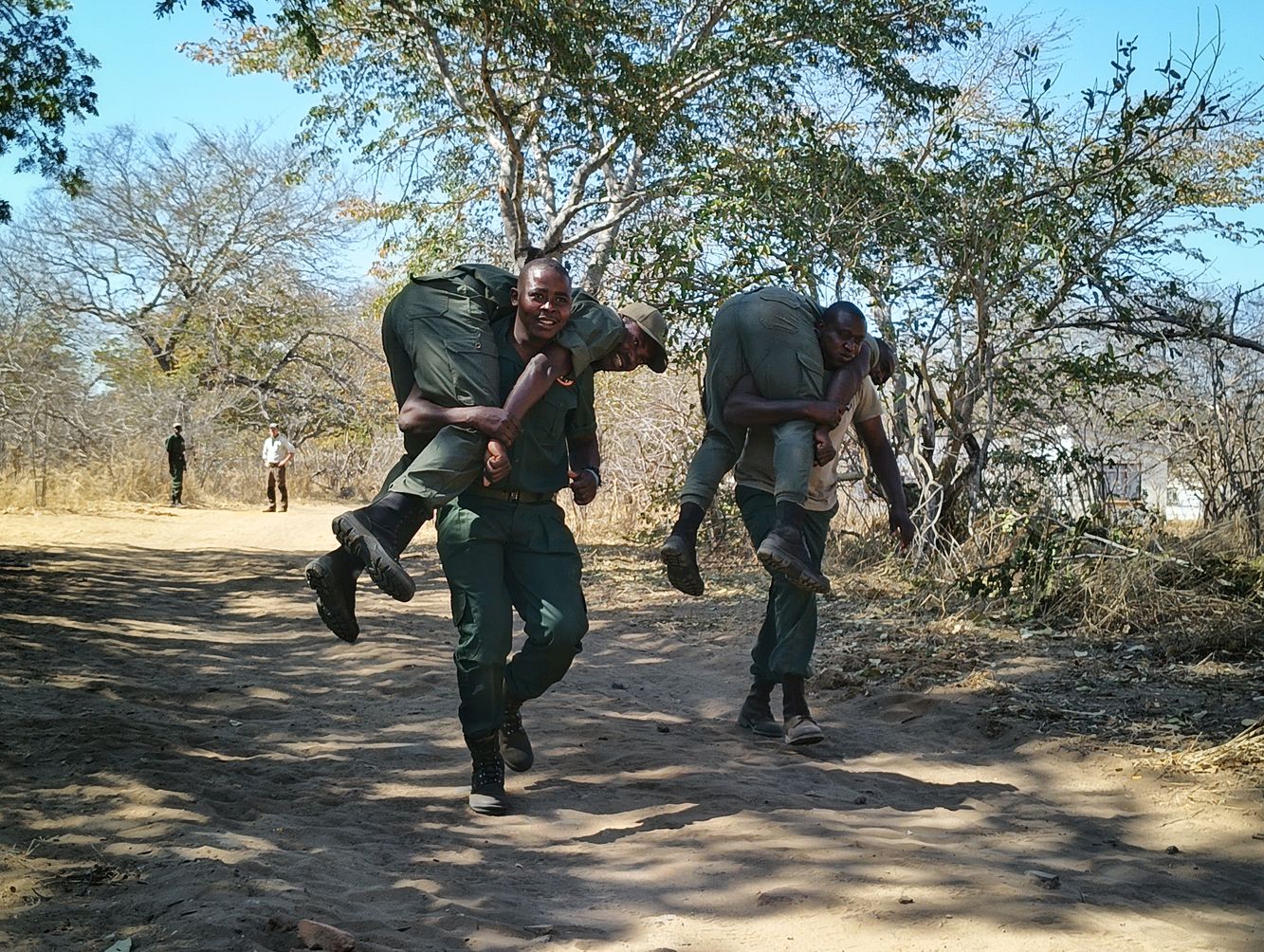
Rangers practice fireman carry in Hwange National Park
© Panthera

Located in northwestern Zimbabwe near the Botswana border, Hwange National Park is a vast mosaic of dry savannah, open woodlands, and mopane forests dotted by seasonal rivers and waterholes. Hwange is Zimbabwe’s largest national park at 14,600 square kilometers — roughly the size of Connecticut — and is home to elephants, lions, leopards, a remarkable diversity of birds, and more. The park stands as a critical stronghold for Africa’s iconic species and a linchpin in regional conservation, but poaching threatens the delicate balance of this ecosystem. 
 
Protecting this vast terrain and all the wildlife it holds are rangers on the frontlines, often working in challenging and remote environments. As part of our Counter Wildlife Crime work, we support the development of a well-resourced, professional and highly capable ranger network, empowering them to serve as effective wildlife guardians. 

In August 2025, we, along with partner organizations, hosted a series of hands-on training sessions in Hwange, equipping anti-poaching teams with essential life-saving and information-gathering skills. This first-of-its-kind collaboration strengthened operational capacity and fostered stronger bonds among conservation teams across the landscape. 

Life-Saving First Aid Training 

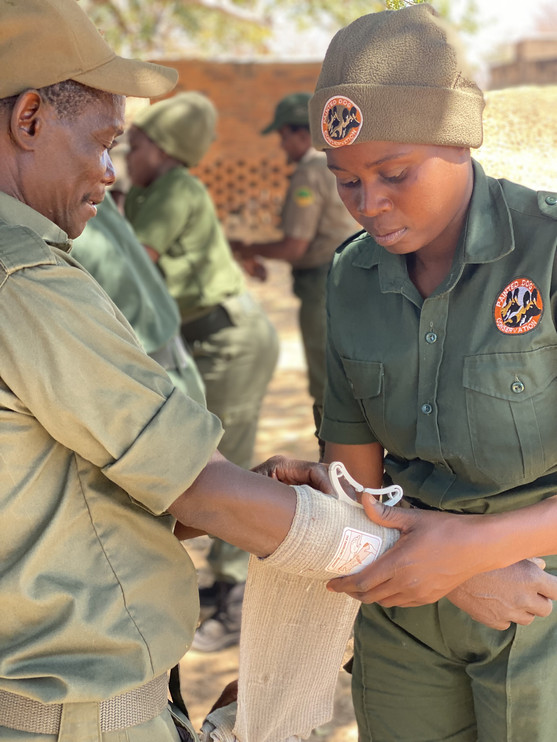
In the field, every second — and every skill — counts. In August, rangers gathered in Hwange for an intensive two-day field first aid course to sharpen life-saving skills. Guided by expert instructors, they practiced managing severe wounds, applying tourniquets, and emergency evacuation techniques like fireman’s lifts and two-person carries — critical techniques when medical help is hours or even days away. 

This collaborative training was the first of its kind in Hwange National Park, bringing together anti-poaching teams from across the landscape for a joint learning experience. Participating organizations included Panthera, Conservation Wildlife Fund (CWF), Painted Dog Conservation, Mother Africa Trust, and the Scorpion Anti-Poaching Unit (SAPU), which is jointly sponsored by Wilderness and Panthera. 

A ranger practices bandaging other ranger's arm.
Participants practice first aid skills.  © Panthera

The rangers honed practical skills under realistic field conditions. For many, this was their first refresher in years, underscoring the crucial importance of ongoing training to maintain confidence and preparedness in high-pressure situations. 

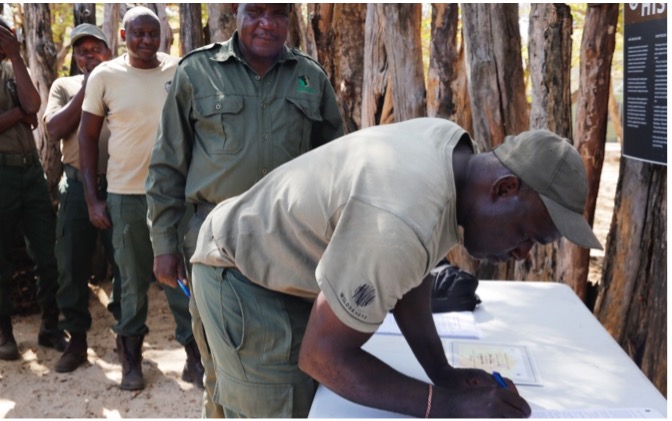
A man signs a piece of paper
 Participants sign the International Ranger Code of Conduct.  © Panthera

Participants were also introduced to the International Ranger Code of Conduct. Several rangers voluntarily signed the code, reflecting their personal commitment to upholding professional standards and contributing to the continued professionalization of the ranger sector. 
 
The training not only strengthened individual capabilities but also reinforced the collective resilience of the conservation community protecting one of Africa’s most vital ecosystems.

Information and Analysis Training 

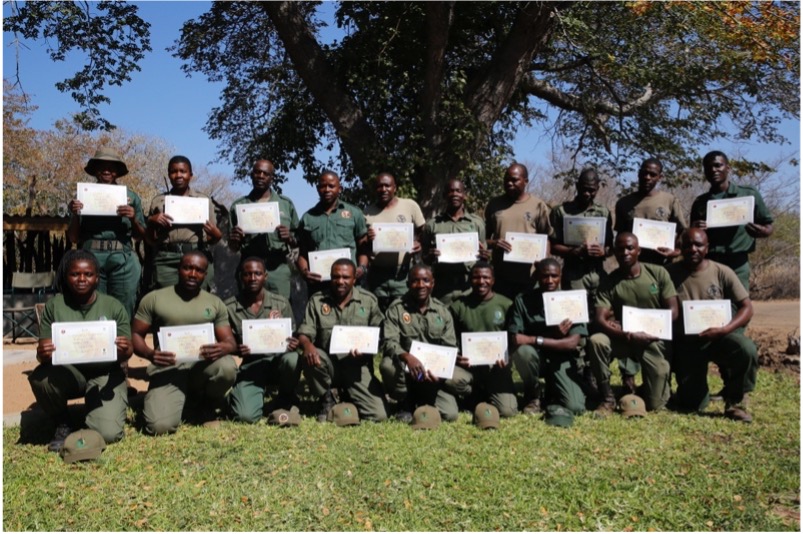
In the fight against poaching, intelligence is as vital as field skills. Following the first aid training, SAPU and members from CEF participated in a three-day Information and Analysis Training Course designed to sharpen their ability to gather, interpret and apply critical information in real time. 
 
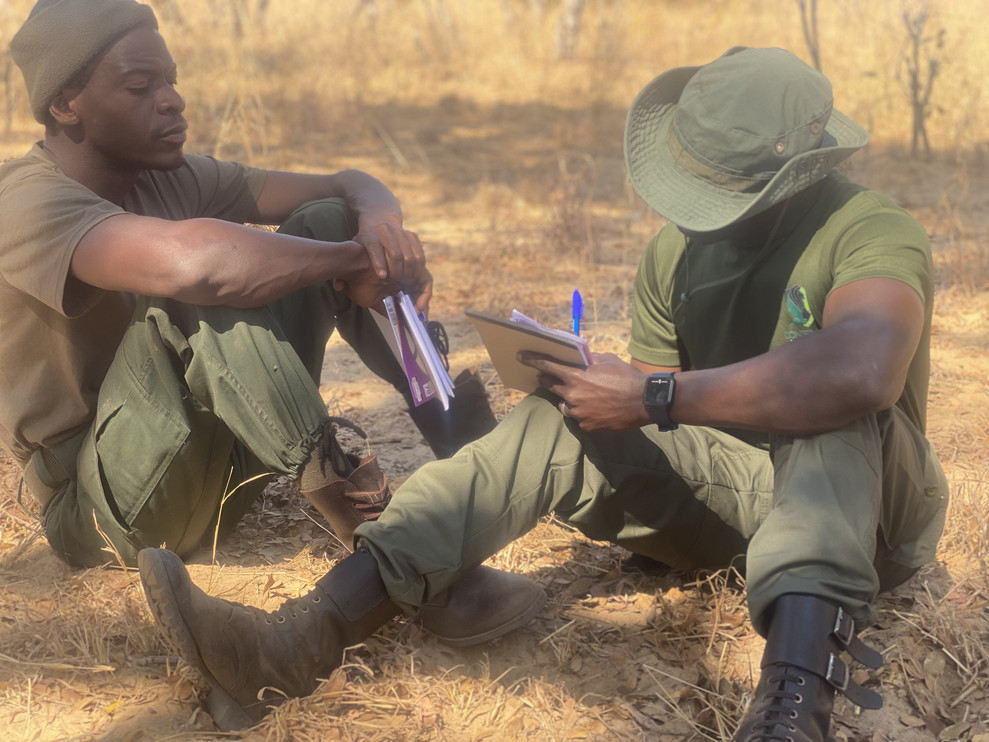
Through focused instruction and practical exercises, rangers developed essential skills in questioning techniques, active listening and detailed observation — tools that transform scattered data into actionable intelligence. They learned how to plan patrols strategically, debrief effectively and apply the intelligence cycle to ensure that every piece of information collected leads to smarter, safer and more efficient operations. 

Group photo of people holding certificates
SAPU and members from CEF participated in a three-day Information and Analysis Training Course.  © Panthera

Accurate, ethical and legal information gathering enhances the effectiveness of patrols and safeguards the integrity of conservation efforts across Hwange’s vast landscape. By equipping rangers with these competencies, Panthera and its partners are elevating the professionalism of frontline teams and deepen their ability to outsmart poachers and protect wildlife. 

This course underscored a vital truth: in conservation, knowledge is power — and empowering rangers with intelligence skills is key to securing a future for Hwange’s wild cats and their habitats. 

Two men interview each other
Participants practice their interview and questioning skills. © Panthera 

Strength in Unity: Collaboration Across Hwange 

Conservation is never a solo endeavor. In Hwange, the power of collaboration is clear: when organizations come together, skills are reinforced, knowledge is shared, and professional bonds are strengthened. The joint trainings brought together multiple anti-poaching teams, creating opportunities for rangers to learn from one another and build trust across the landscape. 

These partnerships extend far beyond a single course. By fostering a connected network of trained, confident and committed rangers, we’re fortifying Hwange’s frontline defenses. Knowledge gained during these sessions is carried into daily patrols, enhancing the safety, efficiency and impact of conservation operations throughout the park and protecting wild cats for generations to come.  

At its core, this collaboration is about more than skills — it is about community. Rangers leave the trainings not only better equipped but also more unified, embodying a shared mission to protect wildlife, uphold professional standards, and safeguard one of Africa’s most vital ecosystems.