

Why Field Skills Matter in Wild Cat Conservation 

By Andrew Stratton
Project Coordinator, Olympic Cougar Project

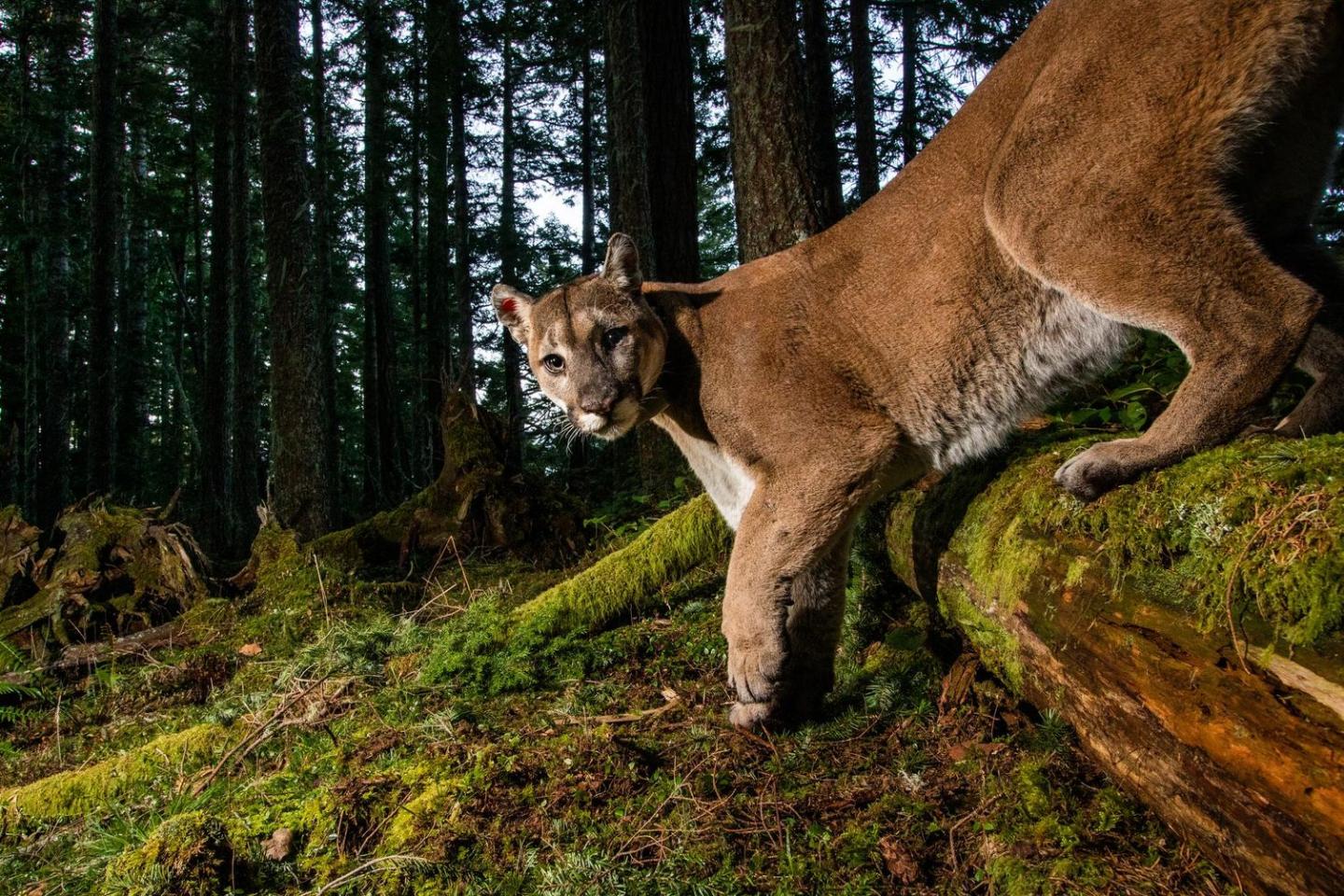
Cougar
© Sebastian Kennerknecht

For our field teams, collecting data on wild cats requires an array of field skills and knowledge. Over the years, Andy Stratton has put his skills to the test working in both the Tetons and in the backcountry of Yellowstone National Park, U.S., the world’s oldest national park. As a senior tracker, he continues to put those skills to good use as the project coordinator for Panthera’s Olympic Cougar Project. This long-term research endeavor aims to understand cougar populations, movement and survival on the Olympic Peninsula in Washington State, U.S. The project is a collaboration between Panthera, the Lower Elwha Klallam Tribe, the Port Gamble S’Klallam Tribe, the Makah tribe, the Jamestown S’Klallam Tribe, Skokomish Tribe, Quinault Indian Nation, and Washington Department of Transportation. 

When Dr. Mark Elbroch, Panthera Puma Program Director, first hired me, it wasn’t for my background in science. It was because I was comfortable alone in the woods. I could sleep anywhere, and I knew how to read the stories animals left behind on the landscape.  

When it comes to wild cat conservation, field skills and knowledge are just as important as academic training. Here on the Olympic Cougar Project, we value field skills at every level. To collect quality data on wide-ranging, cryptic carnivores like cougars, these skills are tested daily — from land navigation and first aid to survival skills like making fire and the mental toughness to spend an unplanned night in the woods. Above all, we value skills as naturalists. Collecting data on cougars is not real-time direct observation. We arrive after the fact and rely upon experience and knowledge, reading the signs these animals leave behind. 

When I first joined Panthera’s puma program in 2018, I was just beginning my journey as a naturalist. I had just wrapped up two years at an outdoor skills school called Alderleaf Wilderness College and was pursuing tracking certifications through Tracker Certification North America (TCNA). 

TCNA is a part of CyberTracker, an international organization dedicated to teaching trailing and track-and-sign skills through certification courses based on quantifiable skill and knowledge, graded through weighted criteria to assess a tracker’s skill level.  

For track and sign, this is done by evaluators asking participants to identify tracks or sign they encounter in the field that day, with varied levels of obscurity. For trailing evaluations, evaluators ask participants to find a fresh trail left by a wild animal like an elk or a bear and then assess the mechanics and trail recognition of the participant as they attempt to follow and find the animal without being noticed. 

In the last eight years, I've obtained the certification of senior tracker. Thirteen people hold the certification in North America, and hopefully more will follow.  

Becoming a senior tracker required vigorous testing of my knowledge and skills, identifying any and all animal sign found on the landscape. I had to find and follow a fresh trail to the bear who created it, observing the animal without disturbing it and then leaving. 

Concurrently, I have been working toward an undergraduate degree in fisheries and wildlife conservation science at the University of Oregon. While the amount I have toiled toward this degree has been immense, I feel that my journey in honing my field skills has taken equal effort — not only in critical thinking, but also in a physical nature. 

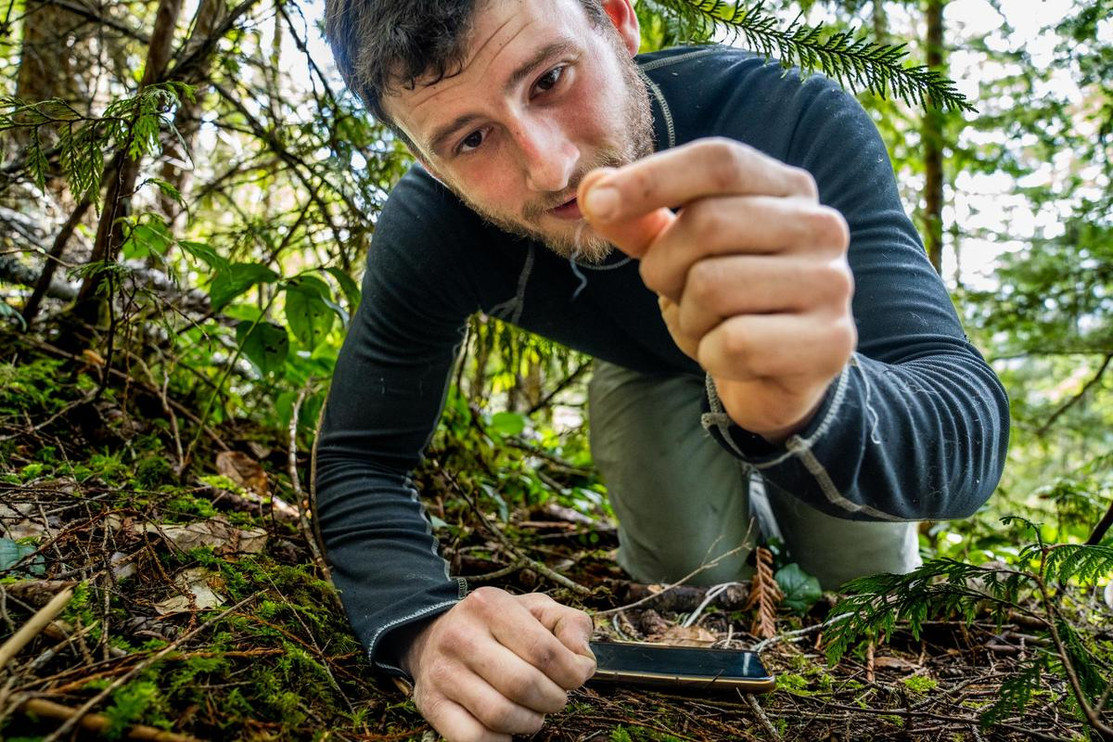
Closeup of Andrew Stratton holding a puma hair
Andy Stratton holds a puma hair he found at a bed site. © Sebastian Kennerknecht/Panthera

A Team Endeavor 

My teammates at the Olympic Cougar Project demonstrate a depth of knowledge in natural history and experience in the outdoors that cannot be taught solely in a classroom or cleanly quantified on paper.   
As I write this, I am proud to say that our crew of five Panthera employees is likely unique in the world because we all hold professional tracker certifications or higher. We all have been through wilderness first responder training, and we have all gladly spent many nights out in the woods suffering together, collecting data and making memories following one of our most elusive large carnivores.  

  • In October 2024, Vanessa Castle, our Cultural Conservation Science Coordinator, scored 100% for her professional certificate on a track-and-sign evaluation in her ancestral territory, positioning her to celebrate a reclamation of this traditional ecological knowledge.  
  • Matt Mahan, Field Technician, has been working with us for the last two years, while independently going above and beyond to learn and teach tracking in his free time. He obtained his professional certificate in early November 2025.  
  • Elsa Heath, our Lead Field Technician, achieved her professional certificate in October 2025 after years of hard work and dedication in the field.  
  • Mark Elbroch is currently the only master tracker in the United States and was instrumental in bringing the organization and process to the United States from southern Africa, where it was originally developed in a collaborative effort between Indigenous San trackers and Louis Liebenberg. 

Across the globe, there are many highly skilled people collecting data that makes wild cat science and conservation possible. I applaud and value them for the time, effort and tenacity it has taken to develop the skills needed to do so.

My advice to the next generation of conservationists and wildlife researchers? School is very important, but don't forget to go outside, too. Put conscious effort into learning skills for collecting reliable data, moving through rugged landscapes and understanding the symphony that is nature, with the confidence in yourself to make it home safely from every foray into the field.