

What's in a Ranger's Backpack?

By Panthera

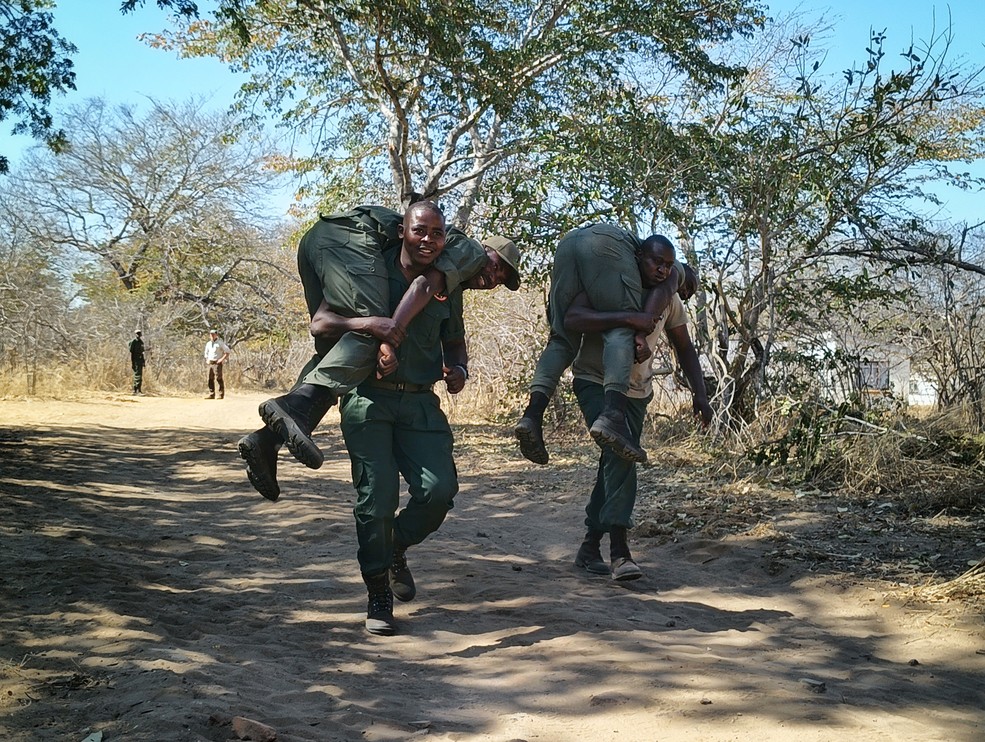
Rangers practice fireman carry in Hwange
© Panthera

Before the sun rises over the savanna, a ranger is already packing. Every item is chosen with purpose, and every gram earns its place. Rangers are critical for wild cat conservation. These teams operate in some of the planet's most remote and demanding terrain, and their backpacks serve as mobile field stations, first-aid kits and command centers rolled into one. Here's a look at what they carry.

1. Topographic Maps

Paper maps don't run out of battery, lose satellite signal in dense forest or crash. Rangers rely on topo maps to plan patrol routes, mark locations and navigate terrain that would stump any GPS. Learning to read the land on paper builds a level of spatial awareness no screen can replicate. A ranger who can read a map can always find their way home.

2. Garmin GPS Device

When communication matters — and in conservation, it always does — rangers reach for their Garmin InReach. These rugged devices record exact coordinates and also allow rangers to communicate via satellite in areas with no cell service, keeping teams connected when it matters most.

3. SMART Technology

SMART (Spatial Monitoring and Reporting Tool) is the digital backbone of modern ranger work. Rangers use SMART-enabled devices to log patrol data in real time — recording everything from wildlife sightings to evidence of poaching. That information syncs to a central database, giving conservation teams a live picture of what's happening across thousands of acres. Every patrol becomes a data point. Every data point means smarter protection for big cats and the ecosystems they call home.

4. First Aid Kit

Conservation is physical, often dangerous work. Rangers cover vast distances on foot through heat, rain and rough terrain — frequently far from the nearest clinic. A well-stocked first aid kit and the skills to use it are a necessity.

5. Boots

If there's one piece of gear that earns its place every single day, it's the boots. Rangers log serious miles across every terrain imaginable — rocky hillsides, dense jungle, flooded river plains. Good boots mean fewer injuries, longer patrols, and rangers who can keep going when conditions get hard.  

6. Camping Gear

Multi-day patrols are standard in large or remote landscapes, which means a tent or hammock, sleeping bag and a way to cook meals are as essential as any piece of technology.

7. Rain Gear and Dry Bags

Rangers range come rain or shine. Waterproof jackets, dry bags and protective cases keep rangers and their equipment operational through downpours, river crossings and the kind of humidity that destroys electronics.

8. Binoculars

Binoculars let rangers scan terrain, track animal behavior and assess situations from a distance. In dense or open landscapes alike, good optics extend a ranger's reach.

9. Headlamp

Rangers don't stop when it gets dark. Hands-free light in the field lets a ranger keep working, navigate safely and respond to situations after sunset or before sunrise.

10. Multitool

A multitool is the everything-else of the pack. Pliers, blade, screwdriver, wire cutter — in the field, something always needs fixing, cutting or improvising. It's the item rangers reach for when nothing else quite fits the problem, which in remote terrain happens more often than you'd think.

And a Few Other Things...

Ask a ranger what's in their pack, and you might just get a surprise. While some items are standard around the globe, others reflect exactly where they work.

Some Central American teams carry antivenom and snake hooks, because where they patrol, that's not optional. Other teams carry machetes to cut through dense jungle or emergency blankets in case temperatures drop at night. For longer excursions, remote cameras come along for the ride. And a few rangers told us the one item they never leave home without: toilet paper.

More Than Gear

What makes a ranger isn't the pack on their back — it's the knowledge, commitment and courage they bring to the job every single day. These tools matter because of the people who know how to use them. 

Rangers are on the frontlines of conservation, protecting the landscapes that wild cats — and all of us — depend on. If their work moves you, consider supporting Panthera's Counter Wildlife Crime program and the rangers who make it possible.