


What Fishing Cats Tell Us About Wetlands, Pollution and People 

By Panthera

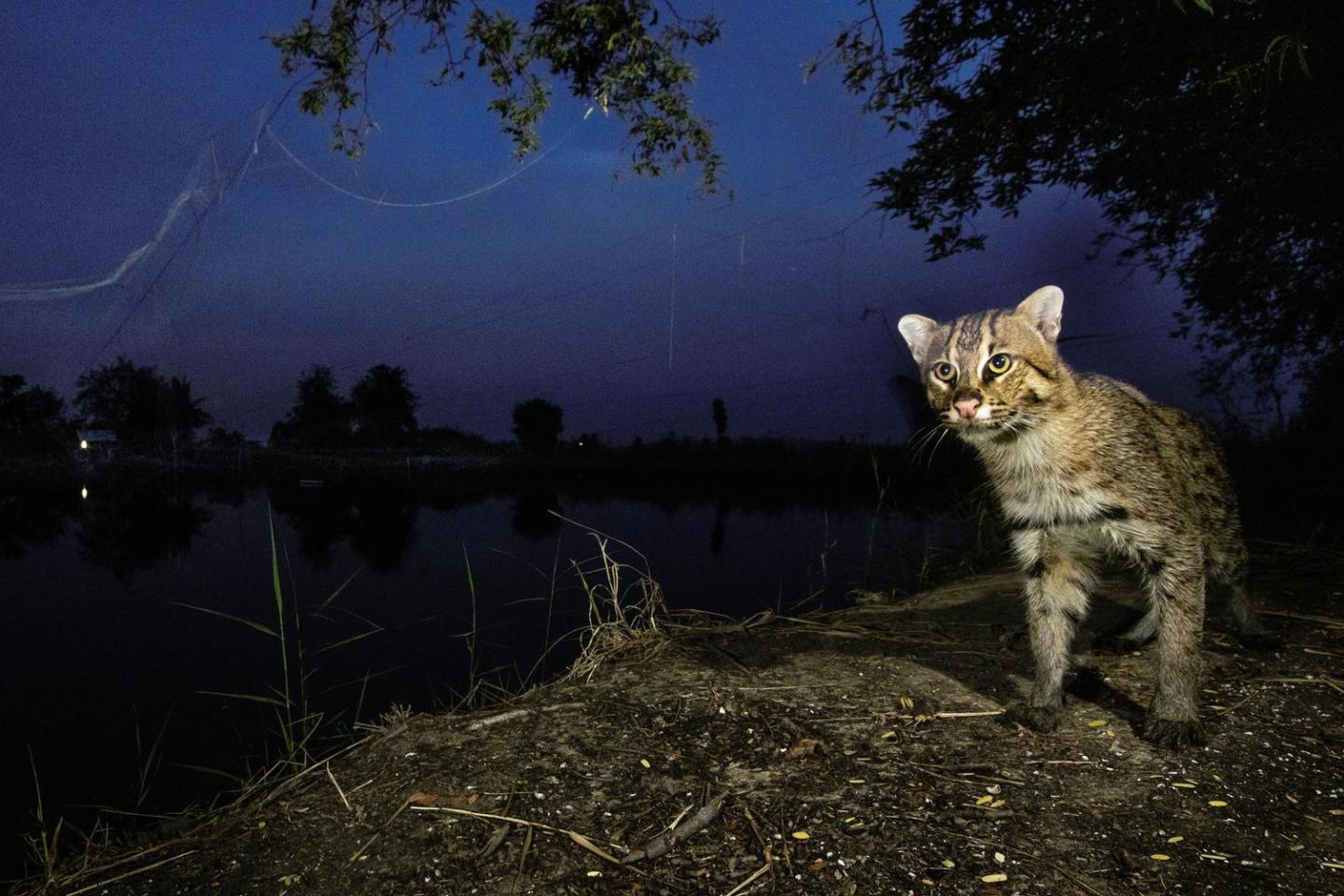
Fishing cat
© Sebastian Kennerknecht

This Fishing Cat February, we celebrate one of the world’s most remarkable — and overlooked — wild cats. The fishing cat (Prionailurus viverrinus) is a powerful swimmer, an expert fisher and a vital indicator of wetland health across South and Southeast Asia. But when fishing cats are at risk, people may be too. 

Fishing cats are most often associated with wetlands such as marshes, reed beds and mangroves. Exceptionally adapted to life around water, they have partially webbed feet and large, protruding claws that help them catch aquatic prey, including fish, crustaceans and semi-aquatic rodents. 

But in a 2023 study supported by Panthera, scientists uncovered a troubling finding: approximately 20% of fishing cat scat contained microplastics. 

Plastic is the most prevalent form of debris found in oceans and wetlands worldwide. Microplastics — plastic fragments smaller than five millimeters — originate from a variety of sources, including the breakdown of larger plastic items. These materials can take hundreds to thousands of years to degrade and never fully disappear. Instead, they persist in the environment, accumulating through food webs from wetlands to plants and animals, and ultimately to humans. 

While the long-term effects of microplastics are still being studied, research shows they pose potential risks to aquatic life. Urban wetlands are particularly vulnerable to plastic pollution, yet contamination levels in wildlife remain largely unknown. 


A post shared by Panthera (@pantheracats)

To better understand the diet of urban fishing cats, researchers collected 276 scat samples in Colombo, Sri Lanka. Unexpectedly, they found microplastics, mesoplastics and macroplastics in the samples. All three plastic types appeared in scats containing rodent remains. Meso- and macroplastics were found alongside avian remains, while micro- and macroplastics occurred in scats containing freshwater fish. These findings suggest plastic is accumulating throughout wetland food webs and that freshwater plastic pollution may pose serious risks to carnivores. 

Fishing cats occupy the same ecological niche as local communities that depend on wetlands for food, water and livelihoods. As apex predators, what accumulates in fishing cats reflects the broader health of these ecosystems. Abnormalities found in fishing cats may also signal risks faced by surrounding communities. 

Plastic debris is not the only threat. Fishing cats face prey depletion driven by unsustainable fishing practices and pollution that reduce fish stocks for both wildlife and people. When wetlands are overfished, cats are often forced into human-managed ponds or fields, where they face increased conflict and retaliation. 

Wetlands are also under pressure from chemical residues linked to intensive shrimp farming and from widespread habitat loss as land is developed. 

Fishing cats are more than symbols of wetland biodiversity — they are a warning system. Protecting them means safeguarding clean water, food security and healthy ecosystems for people and wildlife alike. 

This month and every month, Panthera is working to ensure fishing cats — and the wetlands they depend on — have a future.


A post shared by Panthera (@pantheracats)

This work is grounded in One Health, an interdisciplinary approach which recognizes that the health of wildlife, domestic animals, and human communities are interconnected.  

In Thailand, Panthera researchers are now working to address the growing evidence that microplastics act as carriers for harmful bacteria, forming biofilms that may increase disease risks across species. We are currently partnering with bacteriologists to deepen our understanding of this emerging threat. In parallel, we’re also initiating research on heavy metal contamination in collaboration with Mahidol University. (We also collaborate with King Mongkut’s University of Technology Thonburi on species identification by molecular techniques and Kasetsart University on population and ecological consultations.)

These combined stressors — microplastics and toxic metals — represent a serious, long-term risk, particularly for humans, whose longer lifespans make them more vulnerable to cumulative exposure through bioaccumulation. By addressing these issues now, our work aims to generate early scientific evidence that can inform public health, conservation policy, and preventive action, creating lasting benefits for ecosystems and communities alike. 

Because when wild cats thrive, we all do.