


Small Cats, Big Impact: Meet the Conservationists Protecting the World's Most Overlooked Felines 

By Panthera

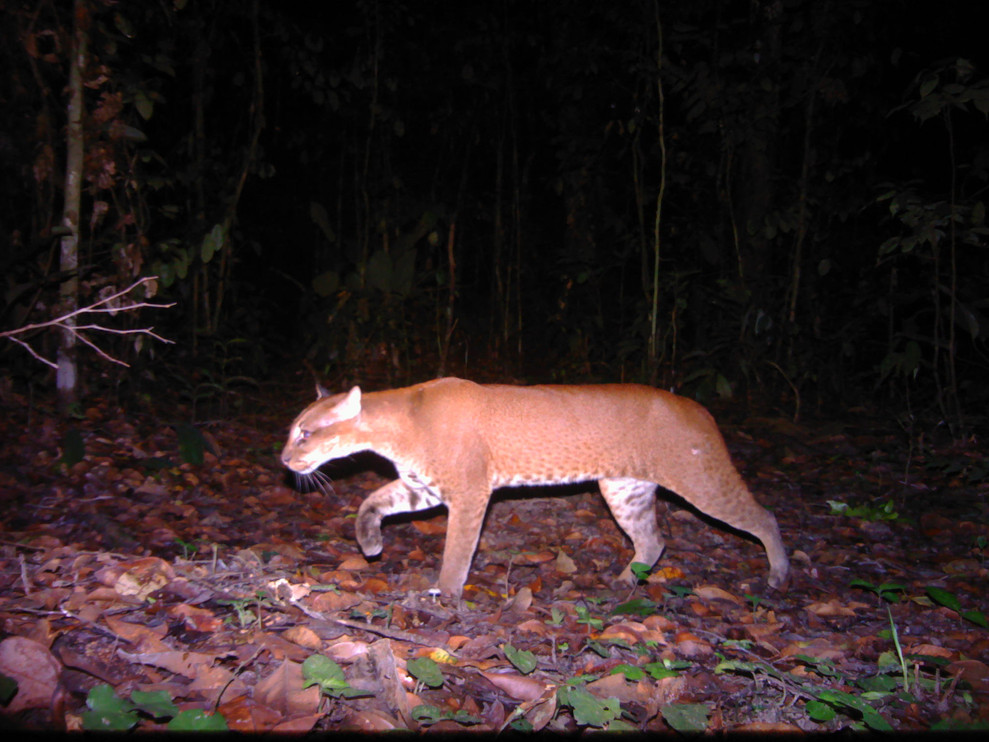
African golden cat
African golden cat ©ANPN/DGFAP/Panthera

Of the world's 40 wild cat species, 33 are classified as small cats. They inhabit five continents, spanning deserts, tundra, mountains, cityscapes and rainforests. These cats — elusive, understudied and often overlooked — are just as vital to the health of their ecosystems and just as urgently in need of protection as their big cat cousins.  That's why Panthera created the Small Cat Action Fund. By investing in researchers and conservationists working on the front lines, we're helping fill critical knowledge gaps and spark conservation action for some of the world's most overlooked wild cats — from the cloud forests of Costa Rica and to the rugged wilderness of Nigeria and beyond. The stories below represent just a few of the remarkable people we're proud to support. 

Navigating Danger: Saving Costa Rica's Oncilla from a Deadly Highway 

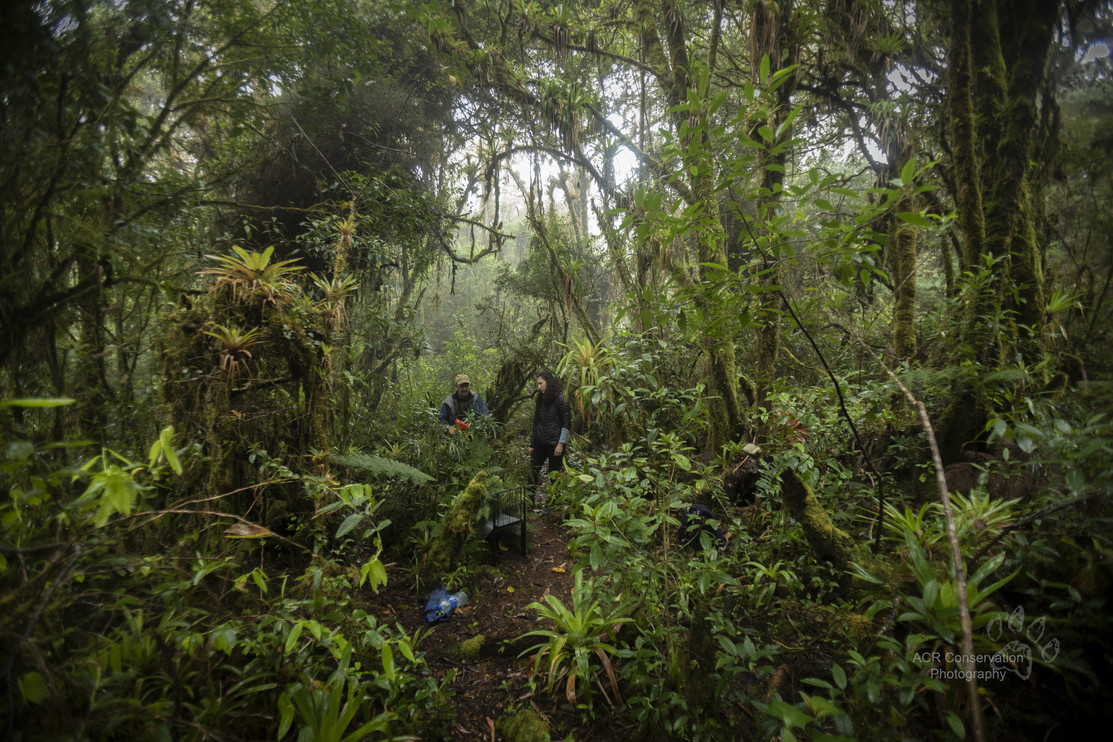
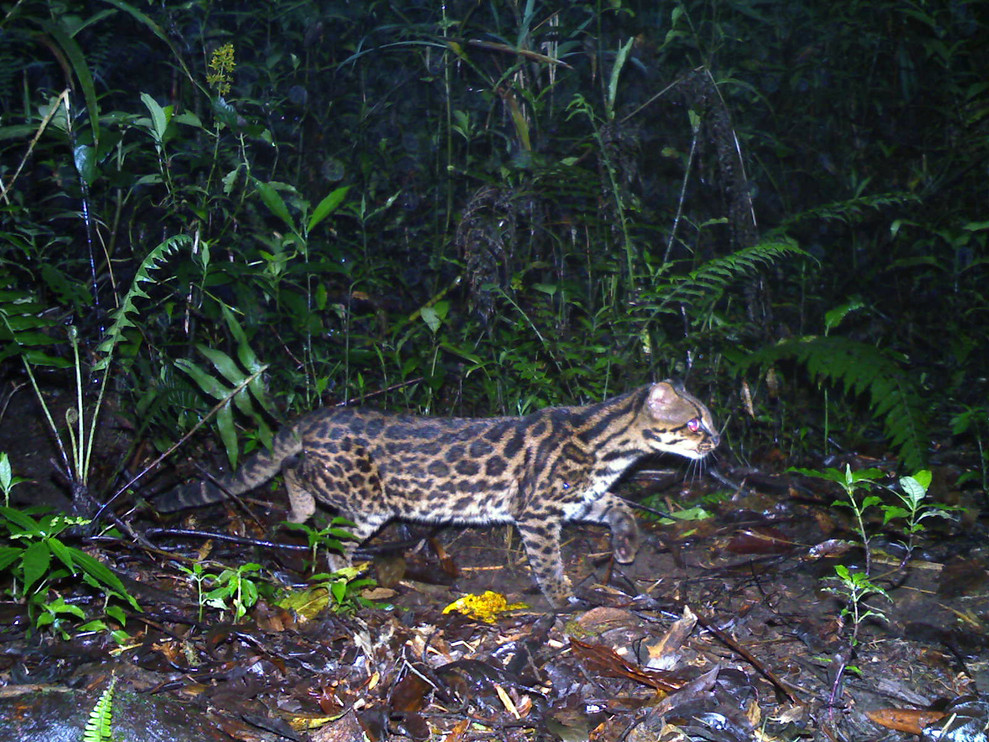
Amaia Autor Cortes, a Ph.D. student at the University of Montana, is working to protect the northern oncilla (Leopardus tigrinus) — a vulnerable and little-known small wild cat — in the Talamanca Mountains of Costa Rica. The region is one of Central America's most important remaining blocks of natural forest, but it is bisected by the Pan-American Highway, a road notorious for roadkill. It is estimated that an average of 13 wild animals per day are killed along a single 45-mile stretch, and between 2021 and 2024, 12 oncillas were recorded dead along the road — a significant toll for a species already at risk. 

Amaia Autor Cortes
Amaia Autor Cortes ©ACR Conservation Photography/alonso Sánchez

With support from Panthera, Autor Cortes is using GPS collars and camera traps to study the oncilla's home range, population density and habitat use and to identify priority wildlife connectivity routes. The project also examines whether habitat loss or fragmentation poses a greater threat to the species — findings that will inform conservation strategies in collaboration with Costa Rica's ministries of environment and transportation. 

“Central American oncillas are found only in three mountain ranges, so their distribution is very limited. They are considered vulnerable, but there are still many unresolved questions about their ecology,” Autor Cortes said.  
 
We don’t know how many individuals are left or how well connected those populations are, but we do know they face threats like habitat loss and fragmentation, and the Pan-American Highway is a cause of oncilla mortality. 

“Without an understanding of population status and how oncillas move across the landscape, we cannot fully understand the impact of these threats or how to reduce them,” she said. “This work is about filling those gaps by both generating the information we are currently missing and providing specific recommendations to improve connectivity and reduce road mortality.” 

Oncilla
northern oncilla  ©Amaia Autor Cortes

A returning grantee, Autor Cortes’ project has been running for almost four years. She has collected movement data on four oncillas, including two melanistic individuals, and calculated home range sizes for each of them. She will use this data to determine the first baseline oncilla population estimates for the region, helping lay out the groundwork for long-term conservation planning. She has also conducted environmental education workshops across five local villages. 

“What I love most about oncillas is how unique and rare they are. They are small, elusive wildcats adapted to life in high-elevation environments with colder climates than the lowlands, which is reflected in their much thicker coat compared to other wild cats in Central America such as ocelots, margays or jaguarundis,” Autor Cortes said. “I love being able to help uncover the ecology of such a little-known species and contribute to its conservation. Working with oncillas constantly reminds me how much there is still to learn.” 

Into the Unknown: Tracking the African Golden Cat in Nigeria

Bello Adamu Danmallam is working to shed light on one of Africa's most elusive felines — the African golden cat (Caracal aurata) — in Gashaka-Gumti National Park, Nigeria's largest protected area. Despite being a top predator in the park ecosystem, almost nothing is known about the species' population size or distribution, and it faces growing threats from poaching, illegal logging, agricultural encroachment and habitat loss. 

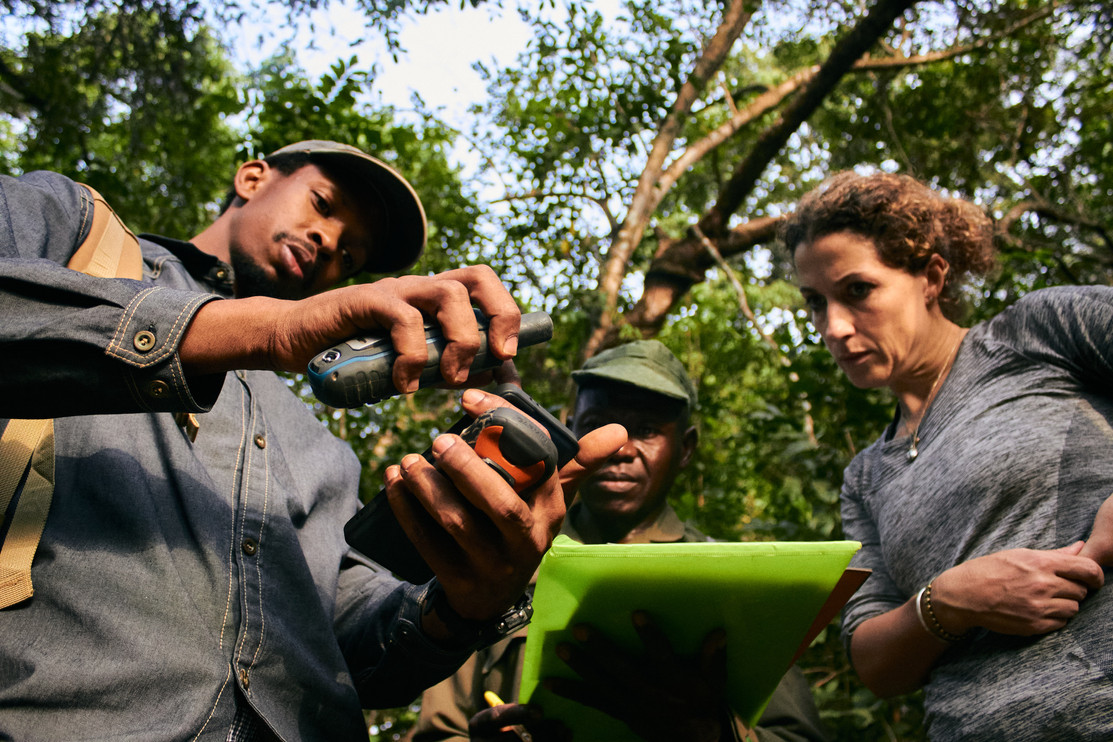
Setting up remote camera
Setting up remote cameras ©Barnabas Sani Bello 

With support from Panthera, Danmallam, a Ph.D. candidate at the University of Jos, along with team members Panshak Solomon Kumdet and Barnabas Sani Bello and staff from our collaborator ANI Foundation, is using remote cameras and community surveys to detect the cat's presence and identify key threats. Photos Barnabas took of the team setting up cameras recently won the 2026 #Tech4Wildlife Challenge, a photo competition showcasing how technology is advancing wildlife conservation around the world.   

The project also integrates remote sensing and species distribution modeling to develop a continental scale habitat suitability map, while building local capacity by training park rangers in GIS, habitat modeling and wildlife monitoring, and engaging local communities to promote coexistence and reduce bushmeat hunting. 

This work will produce the first comprehensive dataset on the African golden cat in Gashaka-Gumti National Park, laying the foundation for evidence-based conservation strategies to protect this little-known species for years to come.

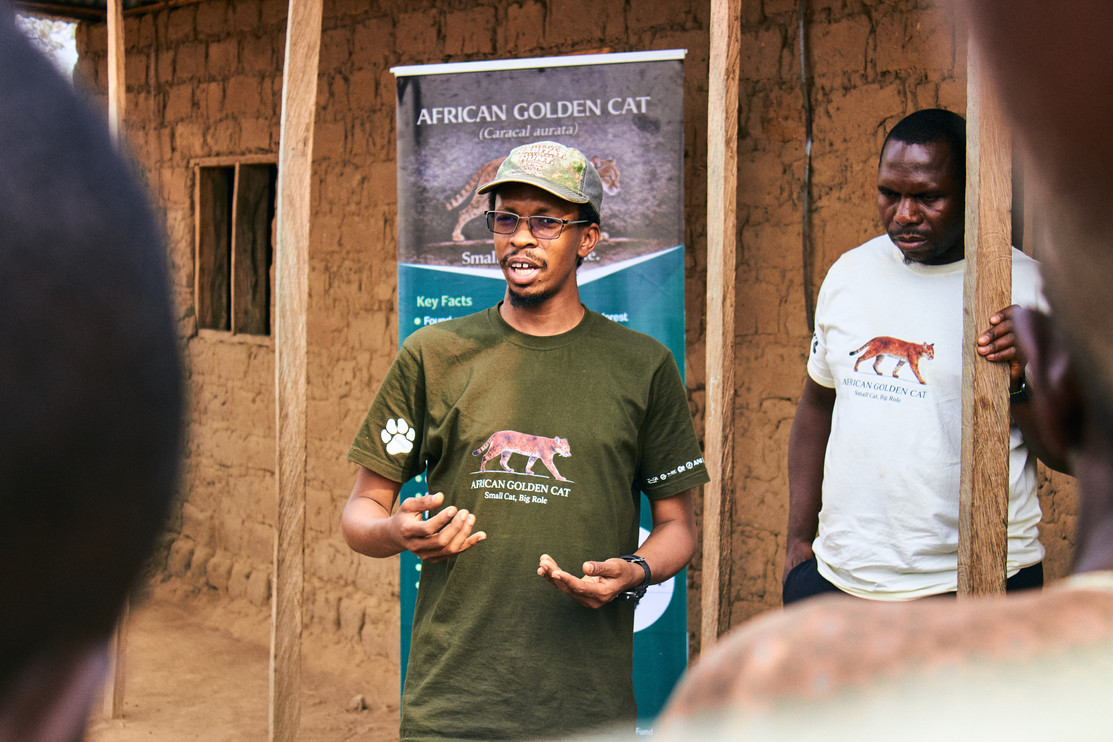
Bello Adamu Danmallam speaking
 Bello Adamu Danmallam ©Barnabas Sani Bello

“We know surprisingly little about the African golden cat (Caracal aurata), despite its ecological importance,” said Danmallam, a new grantee as of 2025. “What fascinates me most is how rarely it is seen and how it moves through these forests almost unnoticed. We are now using science and local knowledge to better understand its distribution and threats. Conserving this largely forest-dependent species means protecting one of Africa’s most threatened forest ecosystems and the communities that depend on them. If we lose species we barely understand, we risk losing much more than we realize." 

Clouded Leopards and Community Pride: Conservation in Northeast India 

Returning grantee Giridhar Malla, Ph.D., of the Eastern Himalayan Marbled Cat Project and the Clouded Leopard Working Group, is working to protect clouded leopards (Neofelis nebulas) and other small wild cats across three states in Northeast India — Arunachal Pradesh, Meghalaya and Nagaland — a region encompassing 35% of the Himalayan range, more than 200 ethnic communities, and nine wild cat species. Large swaths of forest fall outside formal protected areas, leaving the cats vulnerable to hunting, habitat destruction and road expansion.  

With support from Panthera, Malla and his team deployed camera traps across more than 85 square kilometers of non-protected forest in Arunachal Pradesh, and preliminary results indicate a population of 30 to 40 clouded leopards. In Meghalaya, surveys across more than 1,500 acres of community-managed forest confirmed abundant clouded leopard and Asiatic golden cat presence. In Nagaland, camera trap networks are being established across Community Conserved Areas, assisted by local youth trained in wildlife monitoring.   

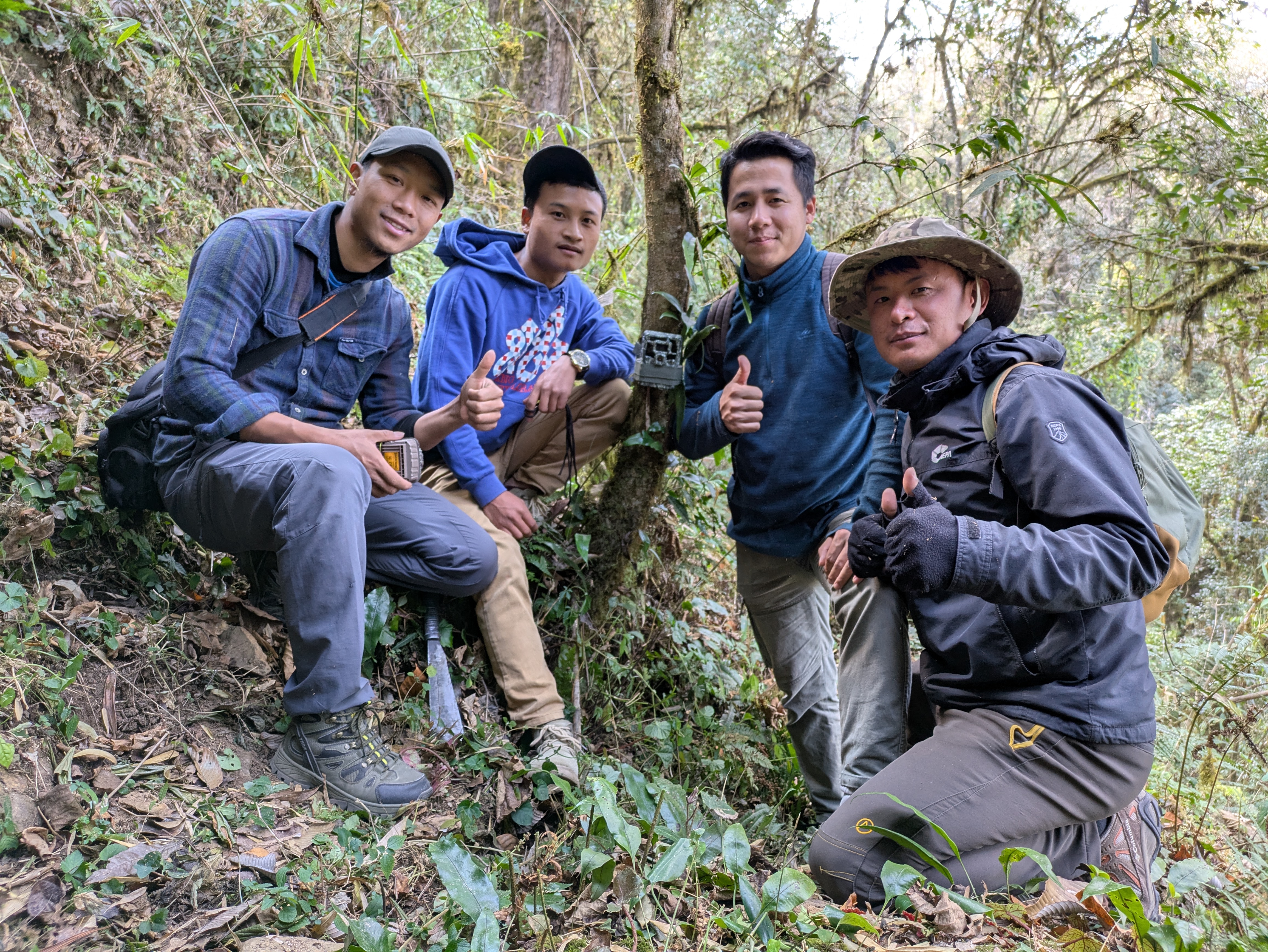
Team photo in from of a camera trap
 The clouded leopard team poses in front of a remote camera. ©Giridhar Malla

The project also produced the first documented account of conflict between clouded leopards and mithun, a semi-domesticated bovine of deep cultural importance to tribal communities, leading to targeted conflict mitigation efforts and the recruitment of former hunters and ex-coal miners as wildlife monitors.  
 
“At its heart, this work is not just about protecting clouded leopards and small wild cats. It is about restoring relationships,” Malla said. “In Northeast India, many of the forests where clouded leopards survive are not inside protected areas, but in lands cared for by local communities. When local people, including former hunters and coal miners, become wildlife monitors and stewards, conservation stops being an external effort and becomes something owned, shaped and sustained by the community itself. That shift is what makes long-term protection possible.” 
  
A standout milestone has been the launch of participatory forest restoration in Pyngdenmawalai Village, Meghalaya, where a 1,000-acre community forest degraded by decades of coal industry logging is being rehabilitated with native species. This is a model the team hopes to replicate across the region.  
  
This landscape is part of the Indo-Burma biodiversity hotspot, one of the world’s most biologically rich yet threatened regions. Protecting clouded leopards means protecting entire forest ecosystems that regulate water, store carbon and support livelihoods.

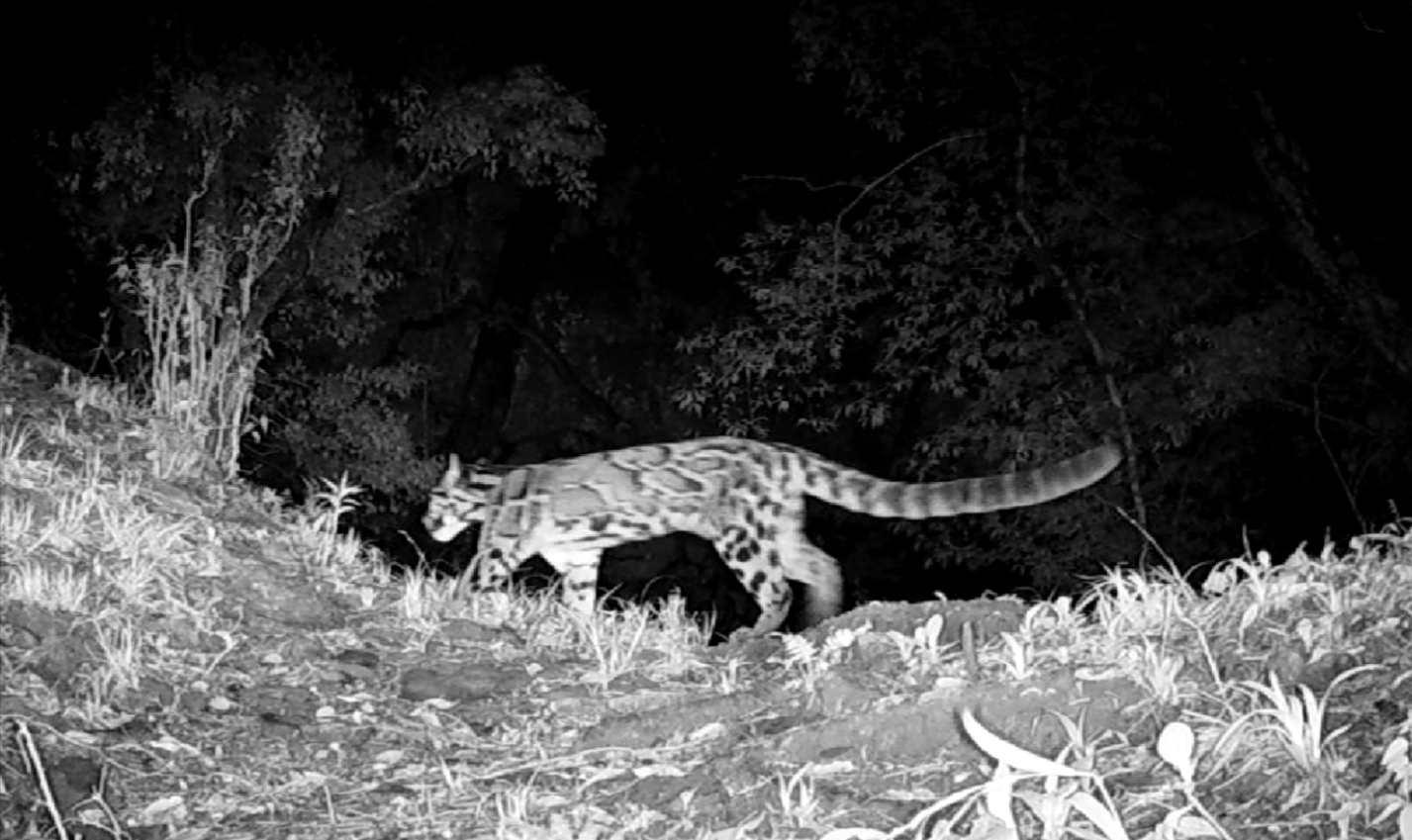
Clouded leopard
clouded leopard ©Giridhar Malla

“When a village restores its forest, it is not only bringing back wildlife but also securing clean water and resilience for future generations. This model shows that conservation and human well-being are not separate goals; they are deeply interconnected,” Malla said. 
  
Despite their strength and beauty, clouded leopards remain largely unseen and understudied, Malla said. “What stands out most is that protecting such a secretive animal requires trust, patience and collaboration with people who share the landscape. In many ways, the clouded leopard represents both the mystery of these forests and the quiet possibility of conserving them together.” 

Together, We are Writing a New Future for the World's Small Wild Cats 

The work of Panthera's Small Cat Action Fund grantees reminds us that conservation is never just about one species or one place — it is about communities and ecosystems working together. From documenting species never before studied in their regions to forging lasting partnerships with local communities, these researchers are laying the groundwork for a future where small wild cats can thrive alongside the people who share their landscapes. With your support, Panthera will continue to champion these hidden gems of the wild cat world.