


Life on the Steppe: How Pallas’s Cats Are Adapted to Central Asia’s Cold Landscapes 

By Panthera

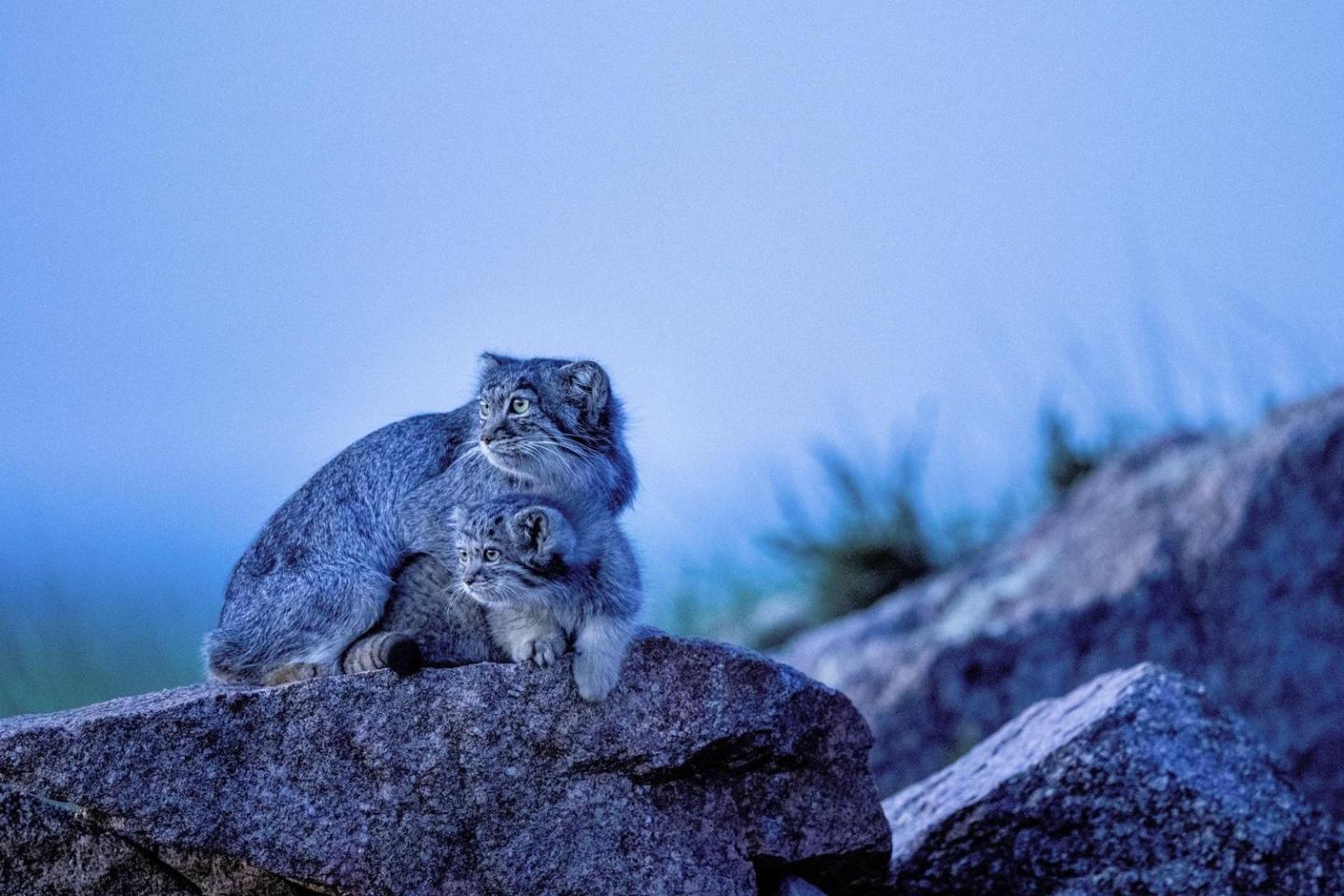
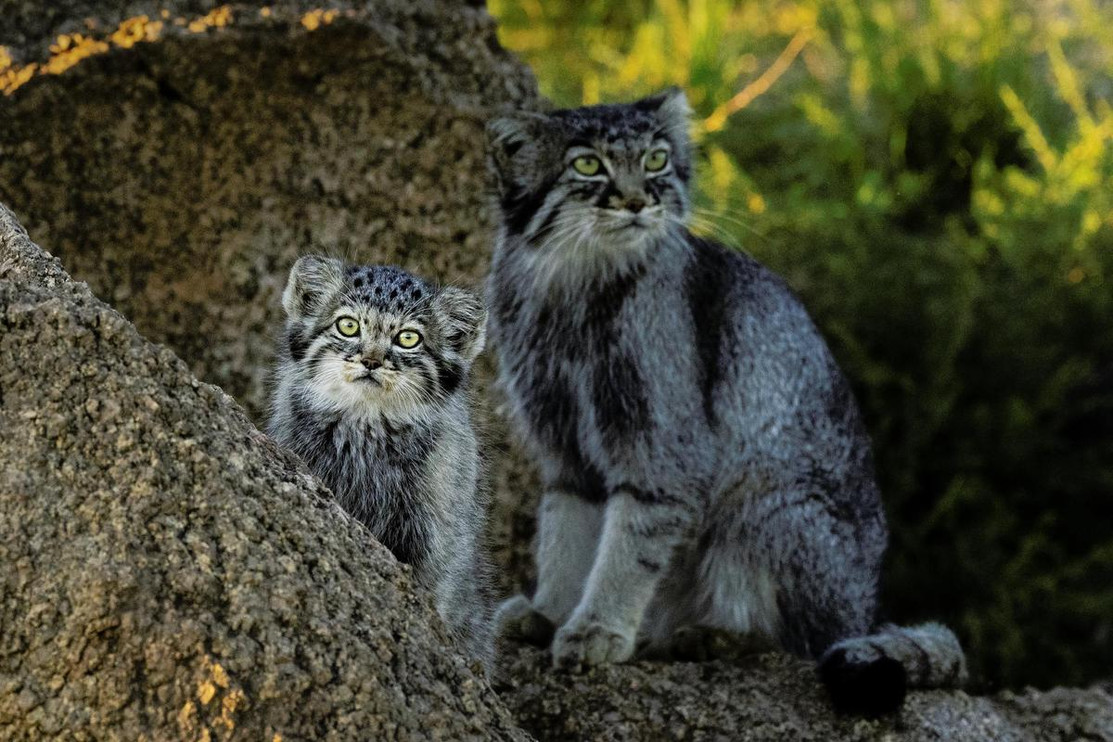
Pallas’s cat and kitten on a rock
© Sebastian Kennerknecht

Pallas’s cat (Otocolobus manul), also known as the manul, is one of the world’s most distinctive small wild cats. Native to the cold, open landscapes of Central Asia, this stocky feline is instantly recognizable for its dense fur, flat face and seemingly grumpy expression. Yet beyond its appearance, the Pallas's cat is a highly specialized carnivore adapted to survive in extreme environments.

As Panthera and our partners work across Central Asia and other regions to study and conserve wild cats, species like the Pallas’s cat highlight the importance of science-based research. Studying elusive small cats and their cold-climate habitats not only deepens understanding of these unique carnivores but also informs broader efforts to protect other wild cats and the landscapes they depend on. 

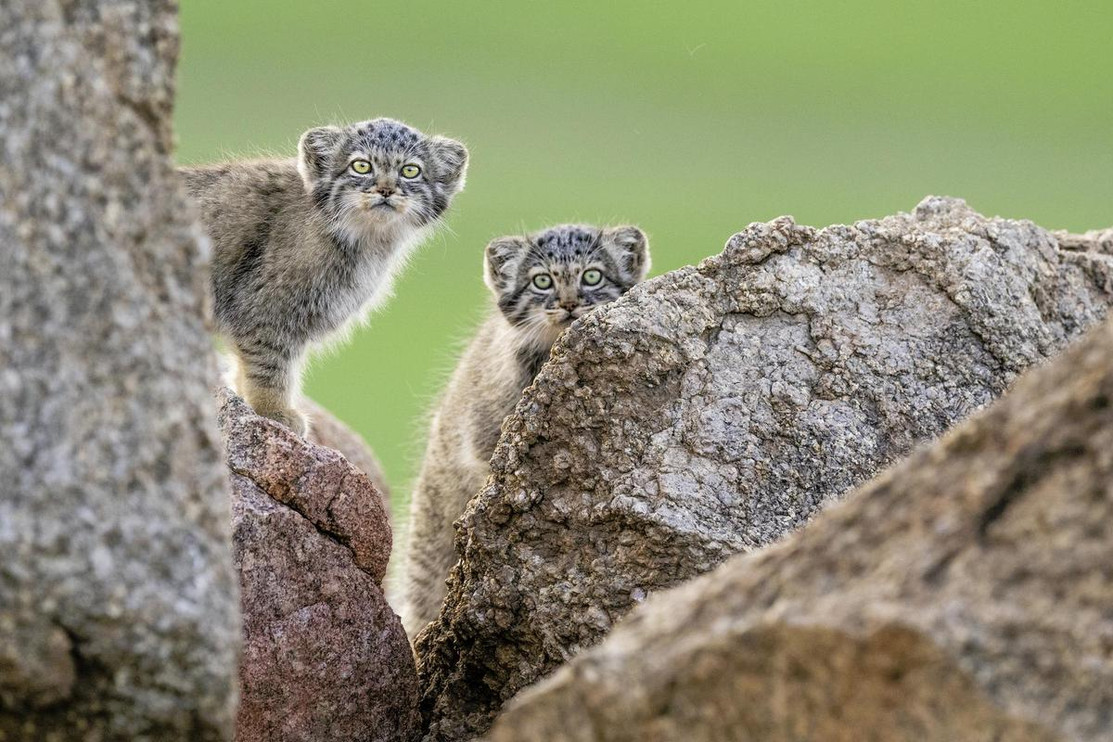
Two Pallas’s cats peer out from behind rocks
Two Pallas’s cats peer out from behind rocks. © Sebastian Kennerknecht

Where Do Pallas’s Cats Live? Distribution and Habitat 

Pallas’s cats occupy a wide but fragmented range across Central, East, South and North Asia, inhabiting some of the most remote regions and extreme climates on Earth. Stronghold populations occur in Mongolia, Russia and western China, with additional populations in Kazakhstan, Afghanistan, Kyrgyzstan and India. Their habitat includes alpine steppe, grasslands, semi-deserts and rocky outcroppings.  

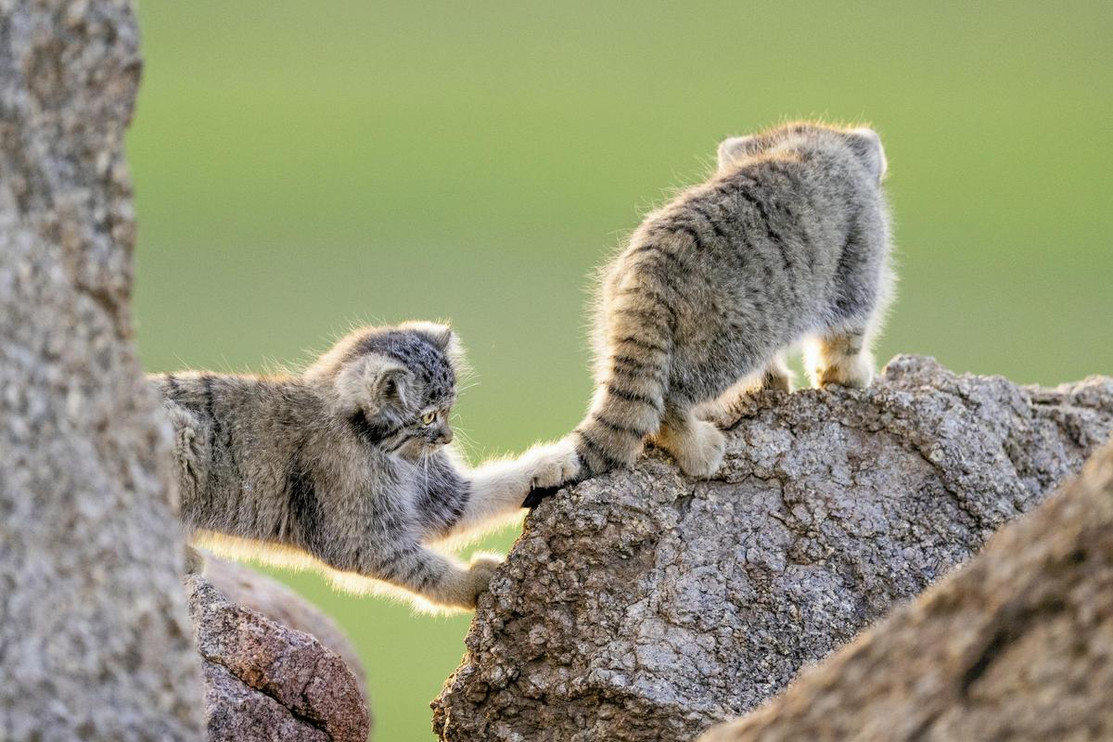
Two Pallas’s cat kittens playing
Two Pallas’s cat kittens playing. © Sebastian Kennerknecht

Adaptations: How Do Pallas’s Cats Survive in Harsh Climates? 

Pallas’s cats have bodies specialized for living in cold, arid environments.  With short legs, a low-slung body and a flat forehead, they are built for stealth rather than speed. Their gray fur also helps them camouflage with snow and rocks. When caught out in the open, Pallas’s cats will flatten themselves to the ground to avoid being seen.  

These wild cats’ broad faces are framed by wide cheeks and low-set, rounded ears — an adaptation that minimizes heat loss and reduces visibility to predators in open landscapes. 

To conserve body heat and keep their paws warm, Pallas’s cats often sit or stand on their long, bushy tails, using them as natural insulation against frozen ground. Their long, dense fur is among the thickest of any cat species, providing critical insulation during harsh winters.  

While well adapted to cold temperatures, Pallas’s cats avoid areas with deep or persistent snow. 

These physical and behavioral adaptations allow Pallas's cats to survive in regions where temperatures fall well below freezing. 

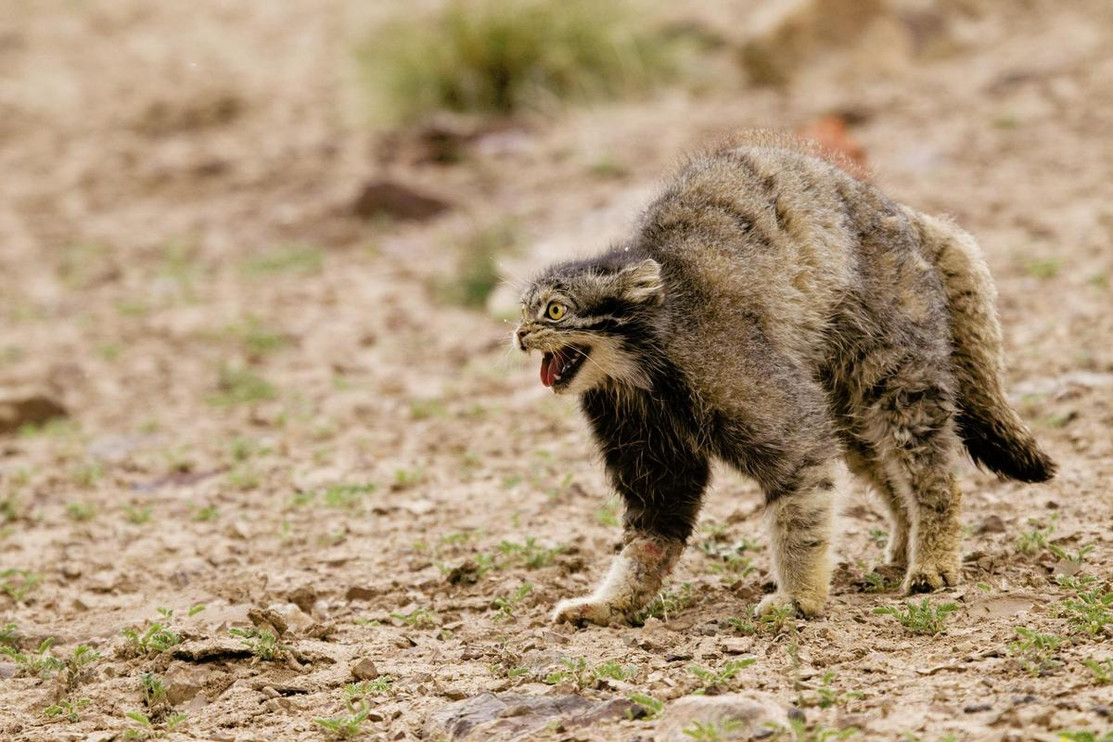
Pallas’s cat in defensive posture
Pallas’s cat in defensive posture. © Sebastian Kennerknecht

Predators and Threats Facing Pallas’s Cats 

Pallas’s cats are classified as Least Concern on the IUCN Red List, with populations believed to be declining. Pallas’s cats face pressure from both natural predators and human activity, including accidental ingestion of poison intended for pikas, bycatch in traps set for wolves or foxes, and direct killing by pastoral farmers' dogs. Habitat degradation caused by mining, agricultural expansion and infrastructure development continues to fragment and reduce suitable habitat. Although international trade in Pallas’s cat fur was banned in the 1980s, illegal hunting persists in some regions. 

Pallas’s cat mom and kitten
Pallas’s cat mom and her kitten. © Sebastian Kennerknecht 

Panthera’s Impact 

Panthera plays a vital role in understanding and protecting wild cats and the ecosystems they inhabit. We focus on science-based approaches that safeguard entire landscapes and multiple species around the world. 

Tools such as camera trapping, ecological monitoring, and community-based programs help improve knowledge of elusive small cats like Pallas’s cats while benefiting other wildlife that share the same habitats across Central Asia and beyond. 

By supporting coexistence with local communities, monitoring wildlife populations and protecting connected landscapes, we contribute to the long-term health of both iconic and lesser-known wild cat species.

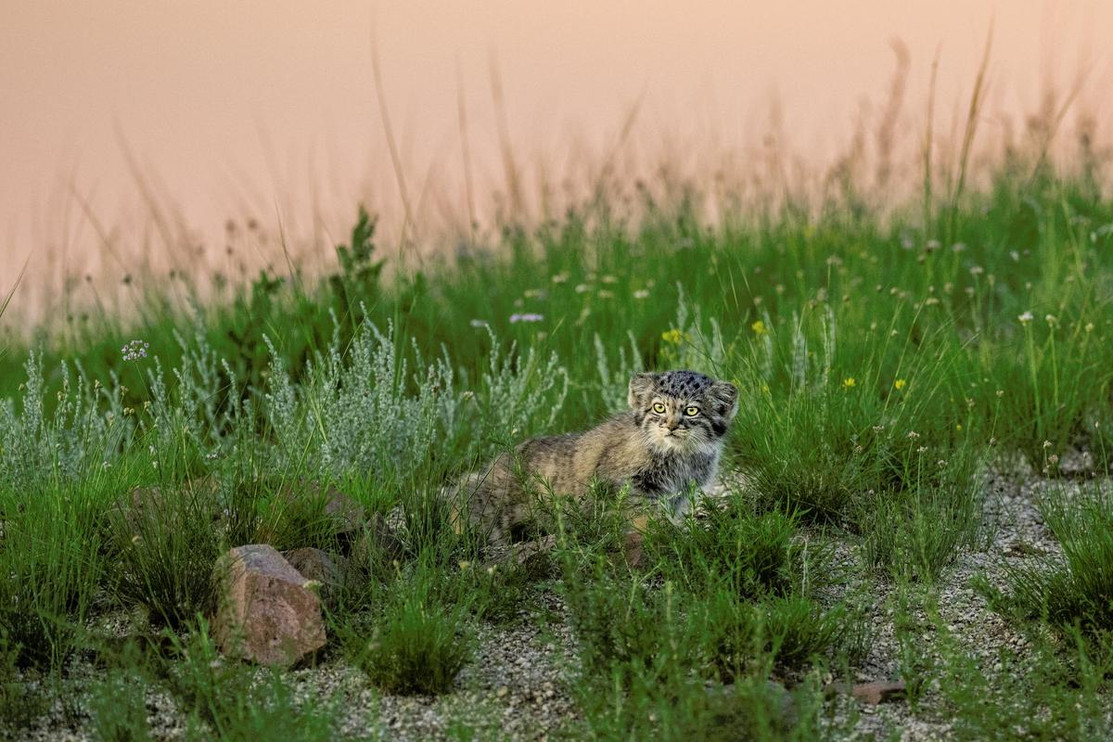
Pallas’s cat in grass
Pallas’s cat in grass. © Sebastian Kennerknecht 

How You Can Help Protect Wild Cats 

Supporting Panthera, staying informed about endangered species research and advocating for responsible land-use practices all contribute to meaningful conservation outcomes. Explore Panthera's Small Cats Program and discover how science-based conservation helps safeguard wildlife for future generations.