


Hiding in Plain Sight: What a Female Sunda Clouded Leopard Reveals About Wild Cat Science

By Panthera

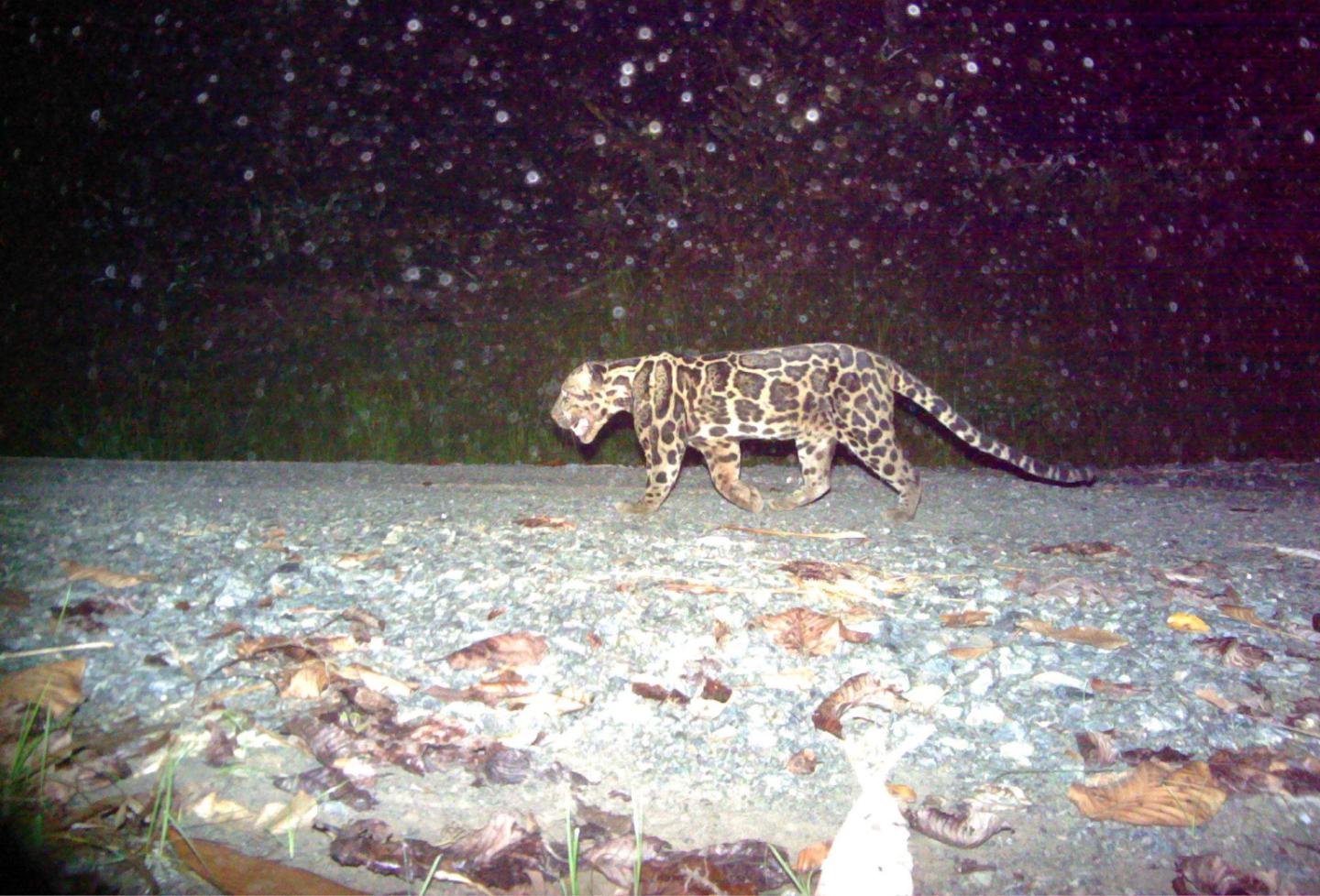
Sunda clouded leopard
© Panthera/Sabah Forestry Department

Deep in the forests of Sabah, Malaysian Borneo, a female Sunda clouded leopard (Neofelis diardi) spent years quietly surviving. Scientists caught fleeting glimpses of her through camera traps over more than six years. And in doing so, they shattered a record. 

The Sunda clouded leopard is one of the most mysterious wild cats on Earth. Found only on the islands of Sumatra and Borneo, it forms a unique evolutionary link between the big cats and the small cats. With fewer than 10,000 mature individuals estimated across this species and the Indochinese clouded leopard (Neofelis nebulosa), it remains one of the least understood felids in the world. Decades of deforestation and illegal wildlife trade have pushed these cats into increasingly fragmented habitats, making every new insight into their biology all the more urgent. 

A new peer-reviewed study led by the Leibniz Institute for Zoo and Wildlife Research and the Sabah Forestry Department, with Panthera as a key collaborator, documents the oldest wild Sunda clouded leopard ever recorded: a female researchers estimate at approximately eight-and-a-half years old. It is a small but meaningful window into the life of one of the world's most elusive wild cats.

15 Years of Data, One Extraordinary Cat 

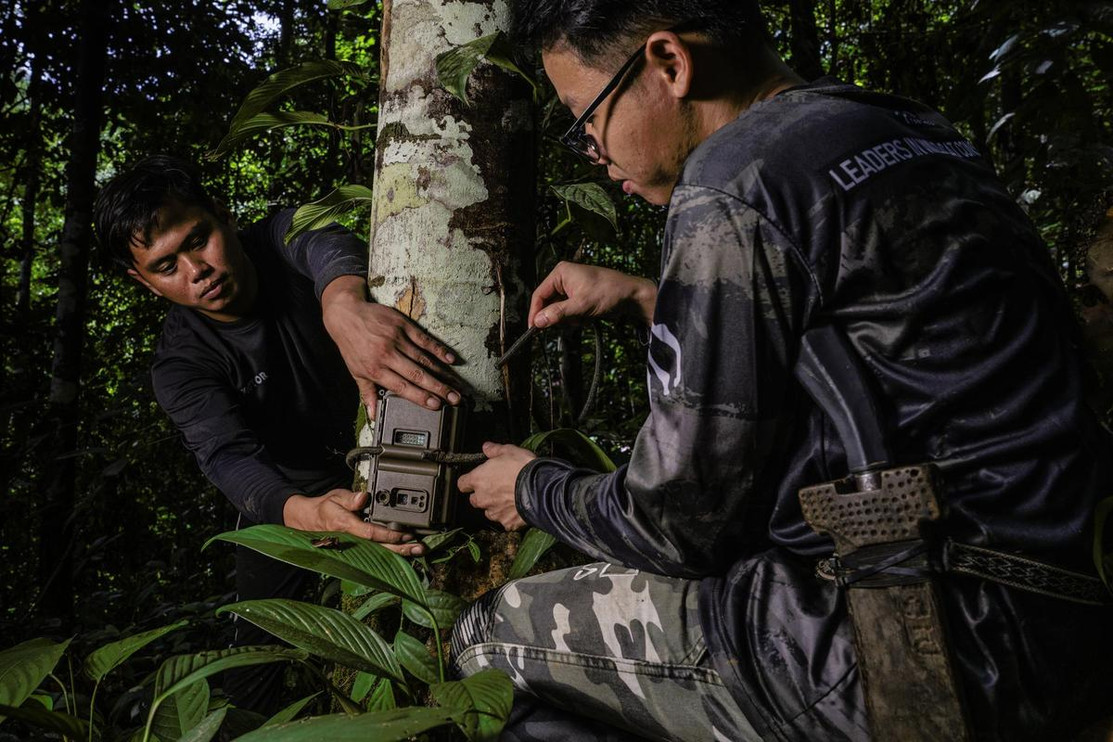
Two biologists set up a camera trap in the Malaysian forest.
Biologists set up a remote camera in Deramakot Forest Reserve. © Sebastian Kennerknecht

The findings emerge from an impressive feat of long-term science. From 2007 to 2023, researchers compiled 13 separate camera-trap surveys conducted across three forest reserves: Deramakot, Tangkulap-Pinangah and Northern Kuamut. Over 15.5 years, the team identified 52 individual adult Sunda clouded leopards (30 males and 22 females) across 437 independent photo-captures. 

This kind of sustained, landscape-scale effort is rare in wildlife science. Most studies of elusive species are limited by short durations or confined to a single site, neither of which can fully capture the life history of a wide-ranging carnivore. In this study, some individuals were detected moving up to 36 kilometers between different forest reserves, underscoring just how large and connected their world truly is. 

Panthera contributed data from its 2018-2019 and 2022-2023 surveys in the region, adding to this extraordinary multi-decade record. 

“Long-term, large-scale monitoring allows us to move beyond snapshots and truly understand how wild cat populations persist over time,” said Wai-Ming Wong, Director of Small Cat Conservation Science at Panthera. “Without it, we risk missing the very dynamics that determine their survival.” 

The Female Who Slipped Through the Camera

The study also exposed a critical blind spot in wildlife science. Female Sunda clouded leopards are detected 68% less often than males, likely because they avoid the well-traveled ridgelines where cameras are typically placed — and may spend far more time in the forest canopy. If females are consistently undercounted, our assessments of this Vulnerable species may be more uncertain than we realize. 

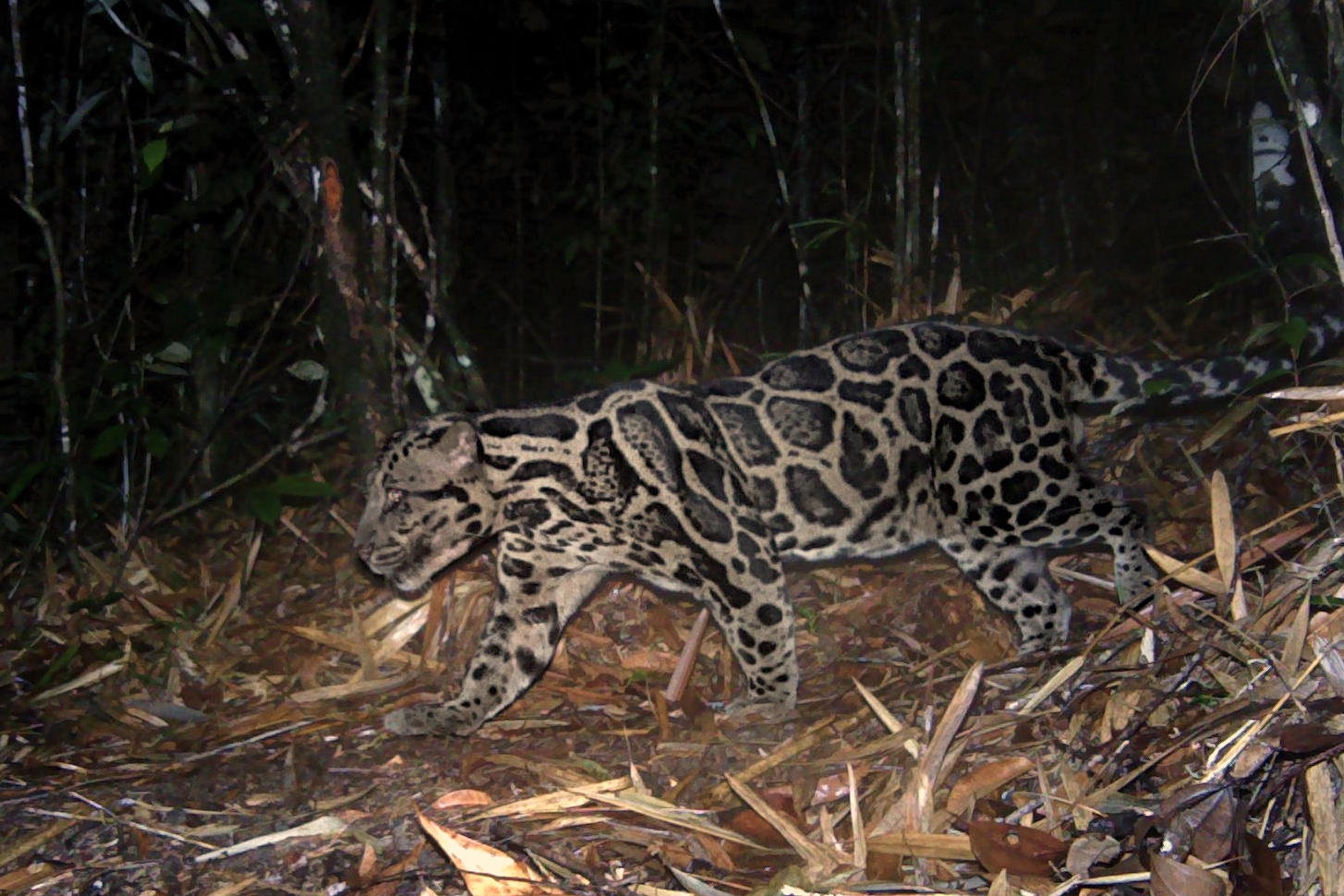
Sunda clouded leopard
sunda Clouded Leopard. © Panthera, Sabah Forestry Department, Leibniz Institute for Zoo and Wildlife Research

“The under-detection of females in the Dermakot-Tangkulap landscape could prevent us from accurately tracking the population’s breeding success,” said Thye Lim Tee, Project Coordinator at Panthera Malaysia. “To better protect the Sunda clouded leopard, our future assessments should view the lack of female detections as a sign to explore the forest interior more thoroughly, rather than assuming they simply aren’t present.” 

The study calls for expanded monitoring techniques, including off-trail and arboreal camera placement, to better capture these elusive individuals. The record-breaking female herself is a testament to what patience and persistence can uncover. 

Why Lifespan Data Matters for Wild Cat Conservation 

Understanding how long a species can live in the wild is not merely a biological curiosity; it is foundational conservation science. Lifespan data informs population viability assessments, which determine how many breeding individuals a population needs to persist over time, how quickly it can recover from habitat loss or hunting pressure, and how vulnerable it is to extinction. 

Previous lifespan estimates for Sunda clouded leopards were limited to males, with the longest recorded residence time topping out at 5.92 years. This study breaks that record for the first time with a female: Her minimum confirmed residence time was 6.51 years, and because she was already an adult when cameras first detected her, researchers estimate her true age at approximately 8.51 years — roughly 43% of the maximum lifespan observed in captivity for her close relatives. 

Species that take years to mature and reproduce slowly can require decades to recover from disturbance. That is why nailing down even a minimum wild lifespan matters: It is one piece of a larger demographic puzzle that conservation planners urgently need. 

Panthera's Impact 

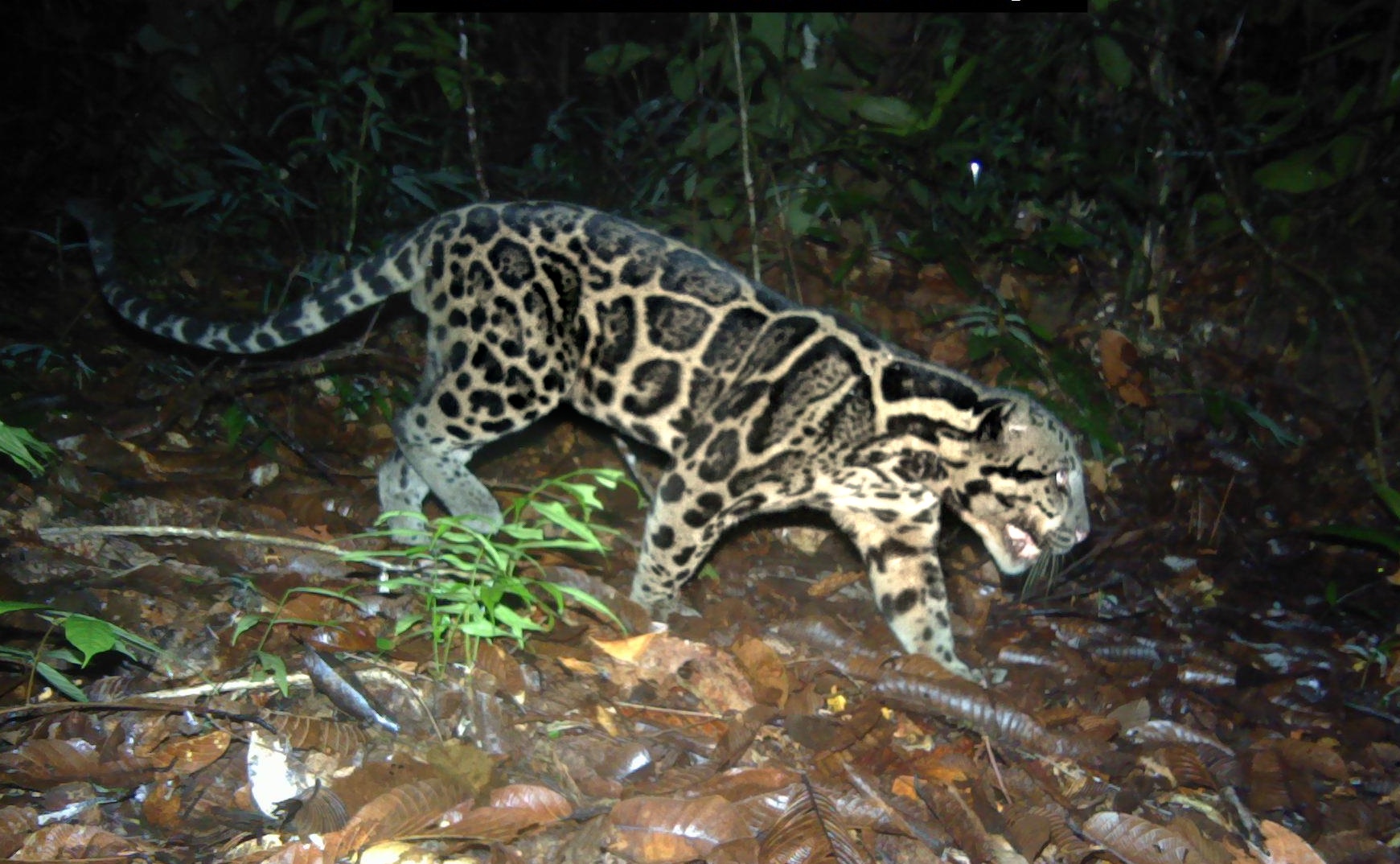
Sunda clouded leopard
Sunda Clouded Leopard. © Panthera, Sabah Forestry Department, Leibniz Institute for Zoo and Wildlife Research

This research reflects what Panthera does best: investing in rigorous, long-term science that makes effective conservation possible. As a collaborator in this publication, Panthera's field teams contributed camera-trap data from surveys in the Deramakot landscape — work that is part of a broader commitment to protecting Sunda clouded leopards and the connected forest habitats they depend on in Sabah. 

This remarkable species faces mounting threats: Decades of commercial logging have fragmented the forests of Borneo, while incidental and trade-driven hunting add further pressure on an already declining population. Panthera works to counter these threats through landscape-scale conservation, strengthening protections for critical habitat corridors, and partnering with governments and communities to ensure these cats’ survival. 

The female clouded leopard at the heart of this study spent years navigating a landscape shaped by logging and human activity — and outlasted every wild clouded leopard on record. Her persistence is a reminder of what these cats are capable of, and what becomes possible when we give them the science and habitat they need to survive. 

To learn more about Sunda clouded leopards and Panthera's small cat conservation work, watch the video below and visit our Clouded leopard Small Cat Spotlight.