



All In for Jaguars

By Panthera

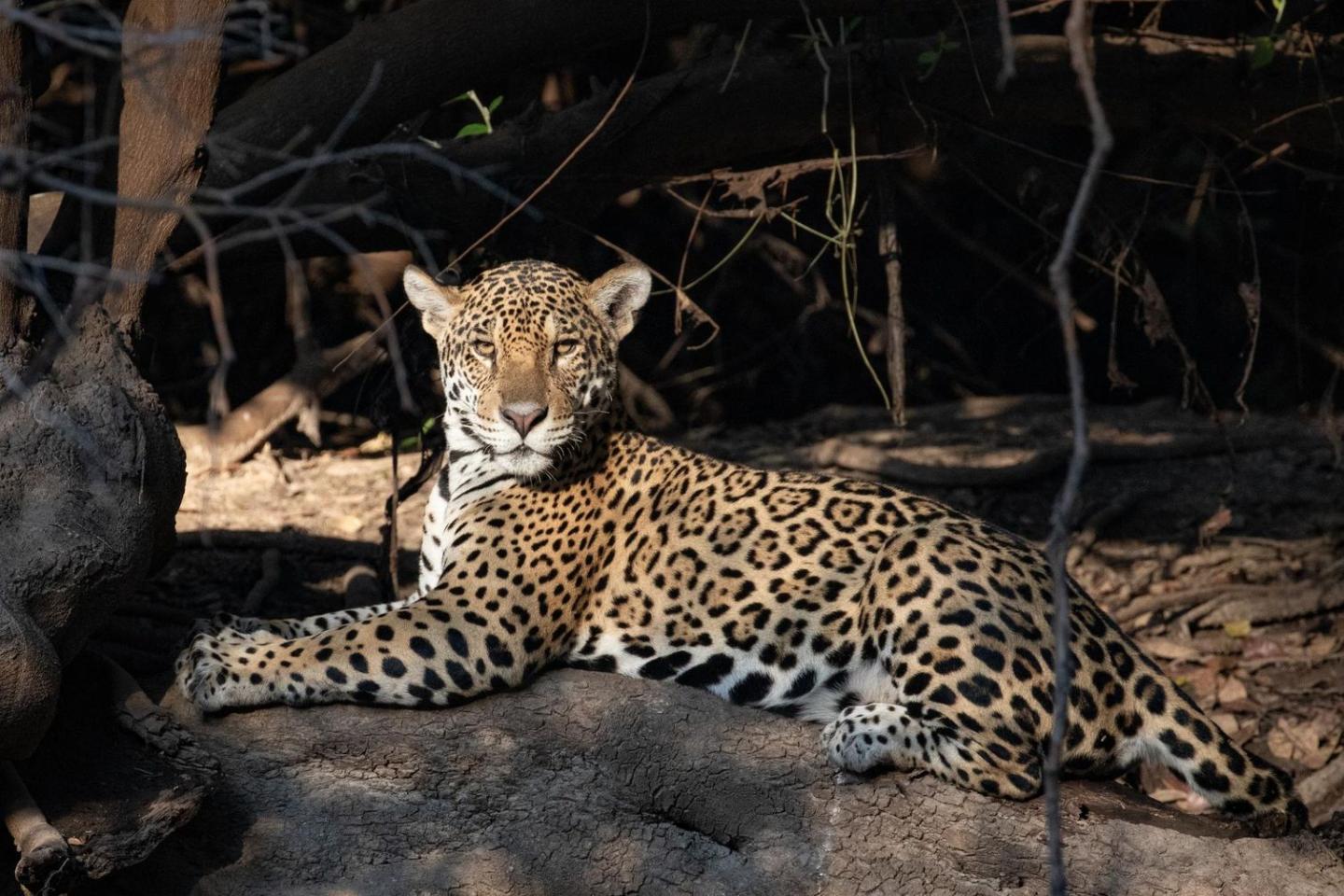
Jaguar
@ Nick Kleer

By Karen Wood, Senior Director of Global Policy, and Dr. Allison Devlin, Jaguar Program Director 

Last month, resounding cheers echoed through the plenary hall of the Bosque Expo Center in Campo Grande, Brazil: the 15th Conference of the Parties (COP15) to the U.N. Convention on Migratory Species (CMS) adopted a Resolution on jaguars, the emblematic species of the Americas. Campo Grande, not coincidentally, sits on the doorstep of the Pantanal, one of Brazil’s most important biodiversity areas and a jaguar stronghold. 

The decision completed an eventful, yearslong effort to align conservation actions under CMS and the Convention on International Trade in Endangered Species of Wild Fauna and Flora (CITES). Parties to both conventions have considered the scientific evidence of a large, wide-ranging carnivore under increasing threat and concluded that jaguars need not — and must not — follow the trajectory of most of the world’s other big cats. (Note: All 19 Jaguar Range States are Parties to CITES; 10 are currently Parties to CMS. Jaguar Range States include Argentina, Belize, Bolivia, Brazil, Colombia, Costa Rica, Ecuador, French Guiana, Guatemala, Guyana, Honduras, Mexico, Nicaragua, Panama, Paraguay, Peru, Suriname, United States and Venezuela.) 

The CMS Resolution draws primarily on the Convention’s strengths in ecological connectivity and transboundary cooperation. The Resolution calls on Jaguar Range States to maintain healthy populations across their range and the corridors that connect them; promote coexistence among jaguars, Indigenous peoples and local communities; restore jaguar habitat; improve population monitoring; and address illegal killing, among other conservation measures. 

The CITES Resolution on Jaguars, adopted at the 20th CITES Conference of the Parties in December 2025, prioritizes mitigating illegal killing and trade. This Resolution calls for improving national legislation and strengthening law enforcement and international cooperation, while increasing awareness, education and behavior-change strategies to reduce conflict-related killings. The Resolution also encourages parties that breed jaguars for commercial purposes to adopt and enforce stringent practices to protect both animals and people and to prevent captive-bred jaguars from entering illegal trade. 

Linking these two policy milestones is the new Regional Action Plan for Jaguar Conservation, developed and adopted by all Jaguar Range States — including the United States — in 2025 in Mexico City. Recognizing that no single treaty can address all threats facing jaguars, the Plan serves as a standalone strategic framework to guide coordinated action among 19 countries and to inform national jaguar conservation plans. The Plan builds on the Jaguar 2030 Roadmap for the Americas, first endorsed by range states in the Jaguar 2030 New York Statement at the United Nations in 2018. 

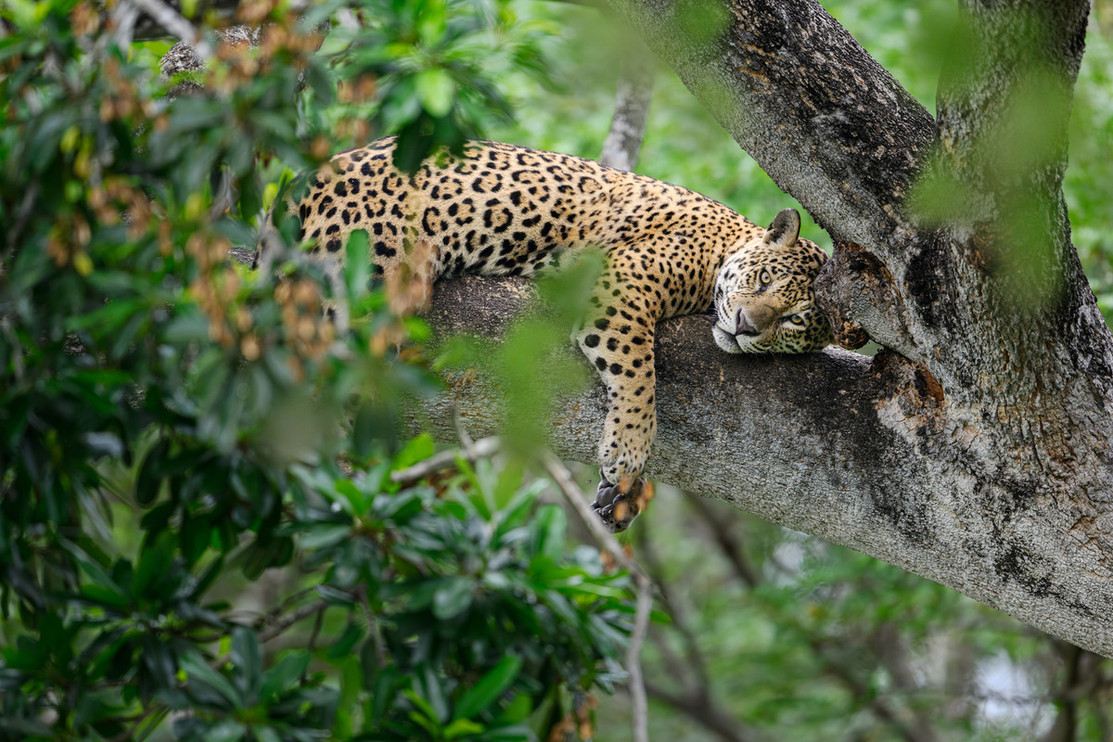
Jaguar
©  Nick Garbutt

The Regional Action Plan sets an ambitious vision for 2050: to protect and maintain a network of well-conserved and connected jaguar populations coexisting sustainably with human communities across native jaguar habitat throughout the species’ historic range, contributing to global goals on biodiversity, climate, health and sustainable development. 

Implementing a Plan of this scale requires an effective cooperation mechanism — an intergovernmental platform for sharing data and best practices, setting priorities, mobilizing and allocating funding, and monitoring progress. At CMS COP15, the U.N. Environment Program confirmed its interest in hosting the platform through its Latin America bureau and has stated its readiness to support range states. Determining the platform’s structure, funding and operations will be the task of an Intersessional Working Group convened by the CITES Standing Committee at COP20. 

Co-chaired by Brazil and Mexico, the Working Group includes CITES parties, jaguar range States, intergovernmental organizations and nongovernmental organizations. The Group will begin work in the coming months and will also consider terms of reference for a monitoring system on illegal jaguar killing. 

Global policy cycles are necessary, but they move slowly — time that jaguars and their habitat do not have. Acknowledging that reality, the newly amended CMS Resolution — originally adopted at COP14 in 2023 — emphasizes the need to rapidly implement priority actions and advance monitoring tools. That work is already underway across jaguar range, from Mexico to Argentina.

Panthera’s Jaguar Program has identified 10 key sites where it currently works — or soon will — with national and subnational governments, local NGOs, Indigenous groups and other partners to protect and connect jaguar populations. A new initiative focuses on safeguarding ecological and cultural connectivity in the Guiana Shield, spanning Suriname, Guyana, French Guiana and Brazil. In this vast area of largely intact forest, teams will inventory and monitor jaguars and prey, while working with Indigenous communities to strengthen capacity to assess and avoid the impacts of illegal and unsustainable development.

In Honduras and Guatemala, Panthera teams are launching a new project in the Bi-National Corridor to study jaguar and prey populations and mitigate threats. In Brazil, where Panthera has worked for more than a decade in the northern Pantanal, efforts are underway to secure the Pantanal-Amazon Corridor — an ambitious project aimed at preserving connectivity between the two largest viable jaguar populations in South America. 

People at a conference
panthera staff and other CMS COP 15 attendees © Panthera

Progress is also being made in monitoring jaguars and their habitat, which is essential for setting conservation priorities and identifying transboundary opportunities. Assessments of jaguar occupancy, density, and population trends are ongoing or set to begin across much of the species’ range. Panthera and partners in the Wildlife Conservation Society-led Act Green project, funded by NASA, have developed an open-source tool for near-real-time satellite monitoring of jaguar habitat structure.

Meanwhile, members of the Jaguar 2030 Roadmap Coordination Committee (Secretariats of CITES and CMS; IUCN; IUCN Cat Specialist Group; Panthera; UNDP; UNEP; UNODC; WCS; WWF; GEF-funded World Bank-led Global Wildlife Program; Melissa Arias, PhD; Esteban Payan, PhD; John Polisar, PhD), along with experts from across the jaguar’s range, are producing the first State of the Jaguar Report, coordinated and funded by WWF and expected later this year.  

Panthera is also co-leading the next International Union for Conservation of Nature Red List assessment for jaguars, scheduled for publication in 2027. Looking ahead, momentum is building to reassess and map core jaguar populations and connectivity corridors — a critical effort that could begin within the next two years. 

Although the Regional Action Plan looks toward 2050, the goals of protecting and connecting jaguar populations remain within reach. Many range states are already implementing national jaguar action plans, with several — including Brazil, Colombia, and Ecuador — having created or updated plans in recent years. Funding from national governments, the Global Environment Facility, the Global Biodiversity Framework Fund and new public and private sources is increasingly directed toward jaguar conservation, reflecting the species’ importance to achieving the U.N. Convention on Biodiveristy (CBD) Kunming-Montreal Global Biodiversity Framework.

Since 2019, the Jaguar 2030 Coordination Committee has worked alongside Range States to advance the Jaguar Roadmap through communications, outreach, resource mobilization and policy, scientific and technical support. 

Panthera and its partners stand ready to collaborate with all Range States to implement the new Regional Action Plan. From global agreements to local action, saving jaguars and their habitat is an all-hands-on-deck effort.