


Requiem: A Few Thoughts on Ted Turner, Panthera and Trying to Do Right by Nature

By Todd Wilkinson
Journalist, Author

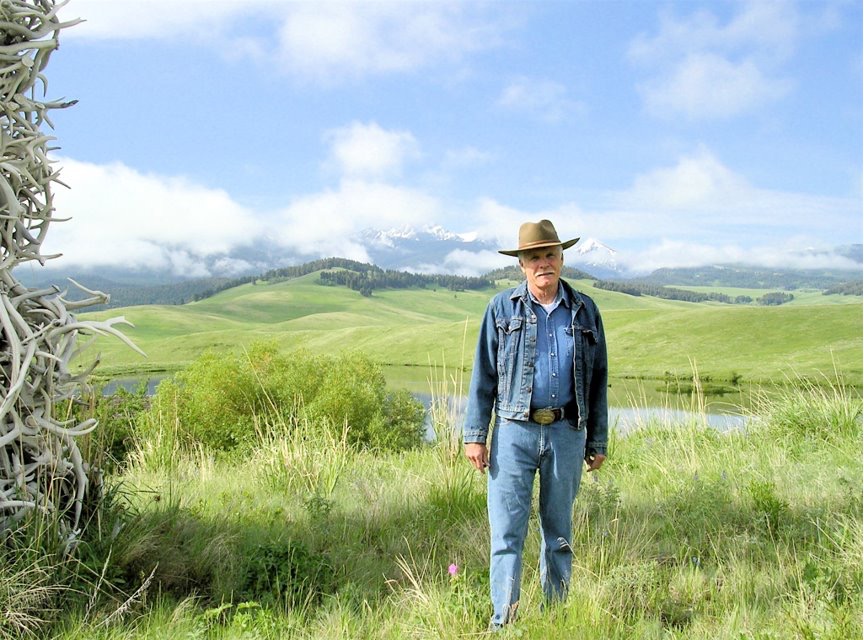
Ted Turner on his ranch in Montana
© Turner Enterprises Inc.

Todd Wilkinson is an American journalist, author and founder of Yellowstonian.org, based in Bozeman, Montana. His work has appeared in National Geographic, The Washington Post and many others. He is the author of several books, including Last Stand: Ted Turner's Quest to Save a Troubled Planet. 

A Comet Across the Conservation Sky

The early 2000s were a hopeful time for innovative approaches to conservation. I was at work on a book about Ted Turner — the seemingly larger-than-life American original, passing across the sky like a majestic comet.

Ted passed away on May 6 at age 87. His evolution as an entrepreneur-turned-media mogul, bison baron and eco-capitalist-humanitarian is well known. But today, that comet has continued its trajectory, leaving behind an expansive contrail of vision and transformation to guide us in stewarding our planet.

Ted's passing is not only cause for sorrow. It is equally an important reminder of how the torch is being passed to future generations and new champions.

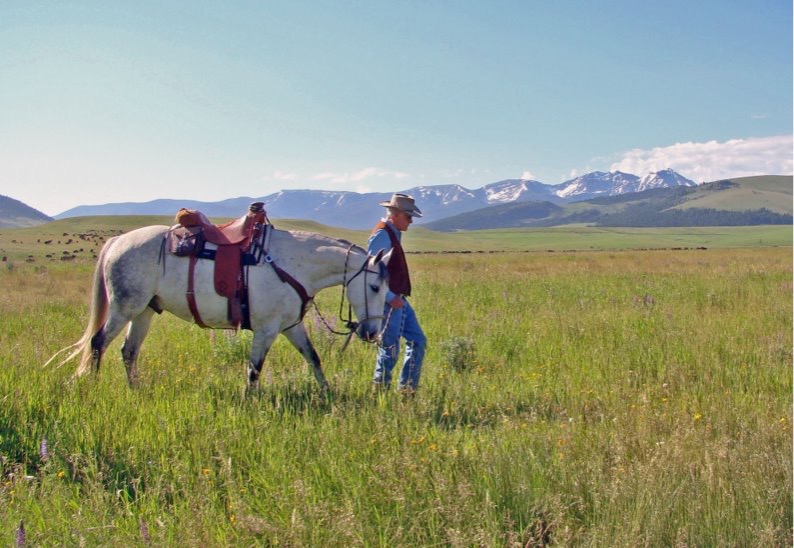
Ted Turner with his horse on his Montana ranch
© Elena Cizmarik/Turner Enterprises Inc.

Building Panthera

In 2006, Thomas Kaplan and the late Alan Rabinowitz, Ph.D., co-founded Panthera. Between Rabinowitz, Howard Quigley, Ph.D., and other seasoned professionals, the organization assembled what was arguably the most impressive team of cat biologists, per capita, in the world.

The rise of Panthera attracted admiration from Ted himself — by then the largest private landowner in America and a believer in science-informed conservation. He placed one of the largest conservation easements in the country on his flagship 113,000-acre Flying D Ranch outside Bozeman, Montana, ensuring it would never be covered with land development, and acquired a dozen and a half additional properties.

The Turner Endangered Species Fund used the lands in his portfolio to function as refugia for imperiled animals and plants. He welcomed wolf packs dispersing beyond Yellowstone to the Flying D, where the ranch today remains home to one of the largest wild free-roaming packs in the world, as well as grizzly bears and mountain lions. He quietly showed how working lands and imperiled species could coexist in cowboy country.

His body of work, simply put, was colossal.

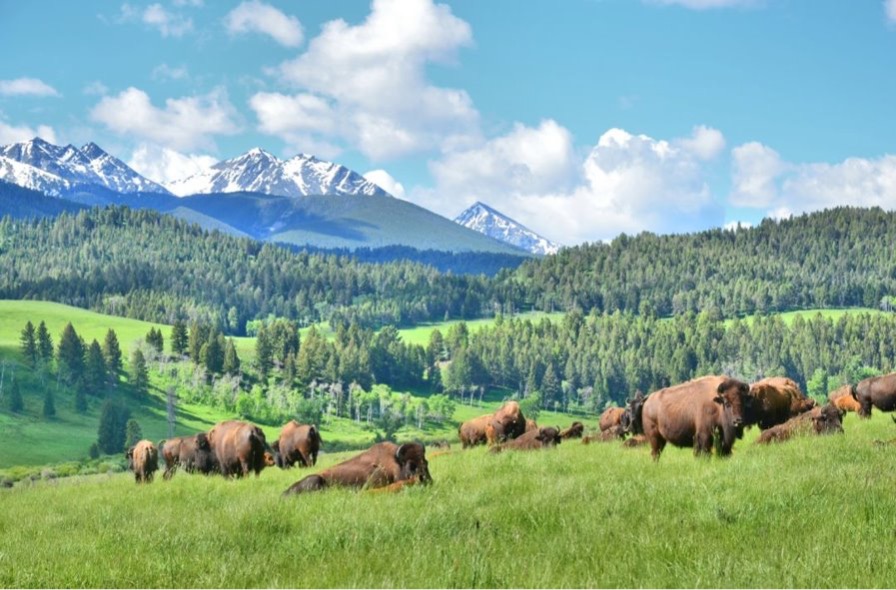
Bison in Montana
Turner is credited with spawning a modern renaissance of public appreciation for bison. © Turner Enterprises Inc.

Passing the Torch

No enterprise came close to the scale of Ted's. However, his legacy would inspire an entire new generation of conservation guardians.

One of them was Tom, whose vast ecosystem of conservation activities — from protecting jaguars in the Brazilian Pantanal to safeguarding herpetofauna in the American South — traces back directly to the trail of the Turner comet. The Orianne Society, which Tom also founded, grew from a simple and personal experience: watching his young daughter fall in love with imperiled indigo snakes. That enthusiasm motivated him to take advocacy for nature to the next level — in direct echo of Ted's powerful ethos of intergenerational transmission.

For two decades, The Orianne Society has highlighted the interconnections between longleaf pine, wiregrass, tortoises and indigo snakes, providing technical expertise to landowners and expanding its focus to imperiled snakes in other regions.

"Ted, along with the great Doug and Kris Tompkins, were simply my greatest inspirations," Tom said. "In Ted's case, the larger-than-life entrepreneur's journey in conservation had rendered him the foremost role model for my own approach to land acquisition and species-focused conservation."

Both men believed in the power of the private sector to move the needle faster and more effectively than federal agencies. Ted's motto needed no elucidation: "Lead, Follow or Get Out of the Way."

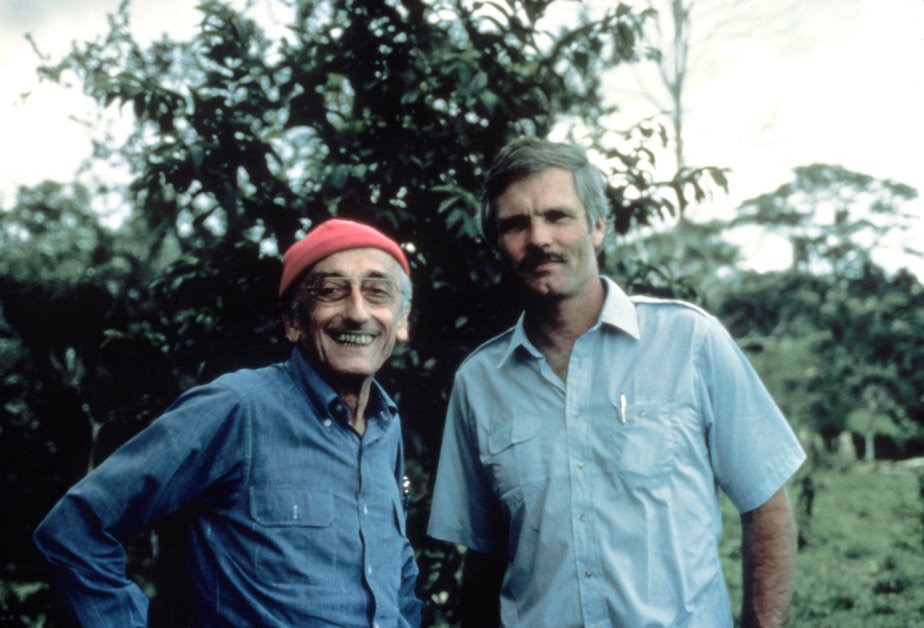
Ted Turner with the late ocean explorer Jacques Cousteau
Turner with the late ocean explorer Jacques Cousteau. © Turner Enterprises Inc.

Think Global, Act Local

While Panthera and The Orianne Society have each earned their place in 21st century wildlife conservation, Tom credits Ted with showing how visionary ideas do not need the permission of people too timid to think outside the box.

Tom specifically points to Panthera's work recovering jaguars in the Brazilian Pantanal — demonstrating how vaquero cattle culture can coexist with jaguars and how wildlife watching can become an economic engine and source of pride for Pantaneiros.

"As I learned with CNN in trying to give it a global reach, the only way to effect real positive outcomes is to think at the large system scale and look for synergies across physical boundaries," Ted told me. "It means recognizing strengths in people who bring different insights, talents and approaches. And it means learning lessons from failures which are actually unavoidable, but often, the best teachers."

Not surprisingly, Ted was a fan of Panthera's Furs For Life project, in which synthetic wearable alternatives replace leopard pelts in traditional coming-of-age rituals. He called the idea, which has saved thousands of spotted cats in southern Africa, "brilliant."

What We Do with Our Luck

Ted helped change the very culture of philanthropy. On a night when receiving an award at the Waldorf Astoria, he gave an unprecedented $1 billion — half his wealth at the time — to the United Nations, telling world leaders they needed to be more magnanimous.

He loved hearing about Tom and his wife Daphne launching The Global Alliance for Wild Cats in 2014 — a coalition of leading environmental philanthropists each pledging $20 million over 10 years toward wild cat survival. It has since achieved unprecedented impact across all 40 wild cat species.

"Anyone can make a lot of money; anyone can have a building named after them," Ted once observed. "It's what we do with our luck that defines our character. What outlasts us, what gives us most pride, is preserving something timeless like the survival of a species. Once gone, it can never be brought back."

Art, Legacy and the Long View

Tom and Daphne share Ted's understanding that art reaches people in visceral ways. Earlier in 2026, Young Lion Resting — an extremely rare drawing by Rembrandt — sold at auction for $18 million, with full proceeds going to support urgent conservation where cats are literally on the edge of vanishing.

"We aren't permanent owners of land or art," Ted reflected. "We are only responsible caretakers at a moment in time, holding them in safekeeping and passing them along to benefit the next generation."

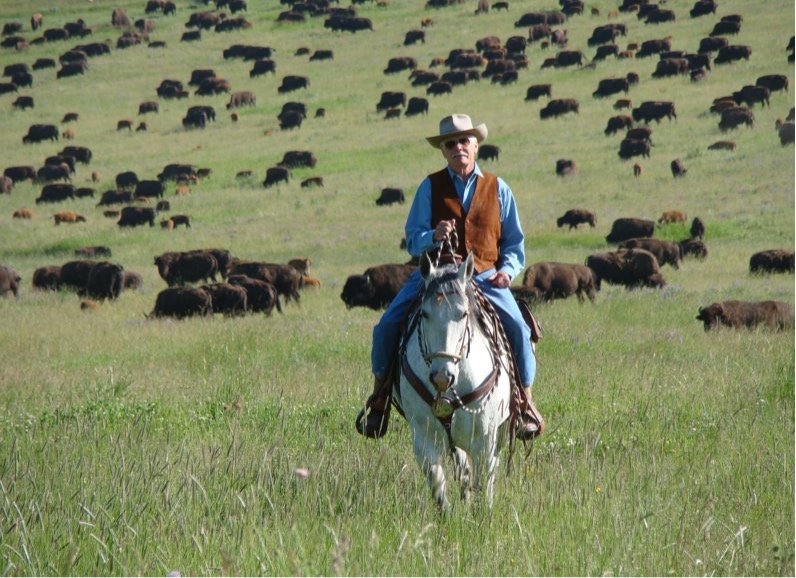
Ted Turner on horseback at his Montana ranch
Turner on horseback riding through his bison herd at the Flying D Ranch in Montana. © Elena Cismarik/Turner Enterprises.

The Photo on the Wall

Several years ago, I superimposed Ted into the famous 1903 photograph of Theodore Roosevelt and John Muir at Glacier Point in Yosemite. It was a fitting tribute: Muir and Roosevelt had anchored American conservation in public lands, but Ted's extraordinary career had written the next chapter — one in which private landowners became equally essential guardians of the natural world.

Ted treasured it as a reminder he was carrying on the legacy of giants he deeply respected. The photo still sits in his Montana living room.

Hundreds of miles away, at his home in New York, Tom has a framed photo of his own: a wonderful image of his kids with the legendary Ted Turner.