

Meet the Rangers Protecting Tanzania's Wild Cats 

By Panthera

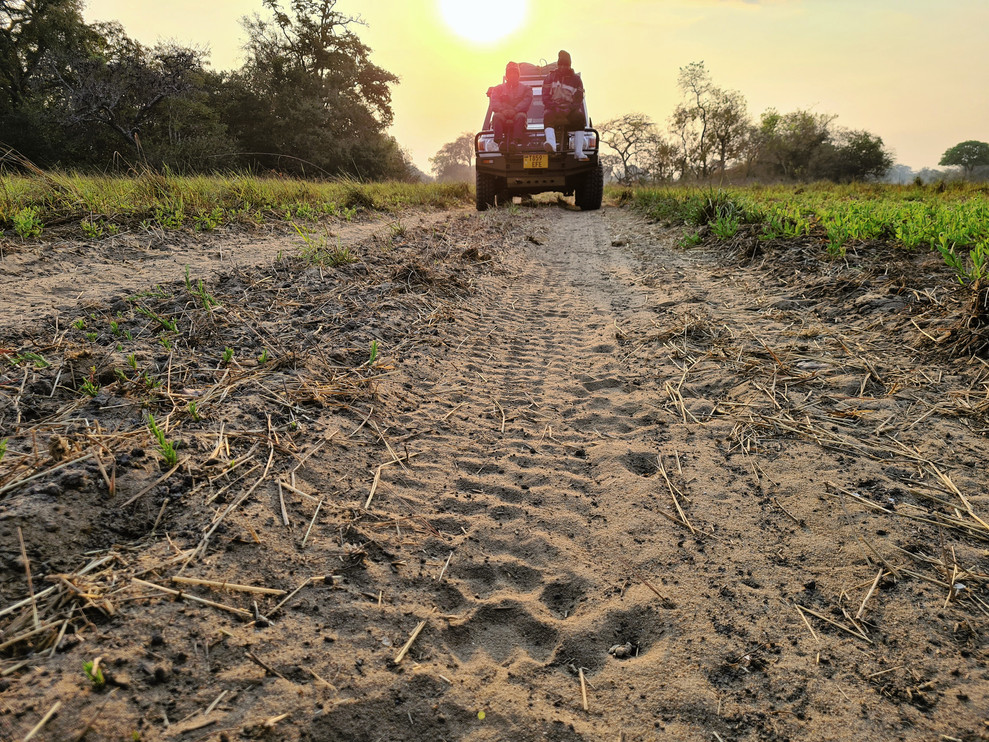
Lion track on dirt road with rangers in the distance
© Paolo Strampelli / Panthera

Rigorous training. Tough field conditions. Working far from family and friends. 

For the folks on the front lines protecting wildlife, this is just a day in the life. 

Through partnerships with the Tanzania Wildlife Management Authority (TAWA) and local communities, Panthera Tanzania is leading research, protection and community-based conservation initiatives in Ugalla and Luganzo-Tongwe Game Reserves. 

A small but mighty team of TAWA rangers and Village Game Scouts (VGSs) works together to ensure the wild cats here survive for generations to come. Meet two of them. 

Meet the Rangers 

William Mkama, of TAWA, is a ranger and the SMART focal point for Ugalla Game Reserve. Originally from Mwanza, it's William's job to organize and coordinate ranger patrols and to manage the massive amount of data that comes from them. He also leads the novel use of SMART (Spatial Monitoring and Reporting Tool) in Ugalla to measure, evaluate and improve the effectiveness of wildlife law enforcement patrols. 

Protecting this landscape secures livelihoods, not just wildlife. Both reserves allow local communities to fish and gather honey under a permit system. To reflect that, Panthera, in cooperation with our partners at the Association for the Development of Protected Areas (ADAP), supported the recruitment of 20 VGSs from four villages surrounding Luganzo-Tongwe to help ensure that all Panthera-supported anti-poaching patrols are joint TAWA-community patrols.  

Hamis Mashaka is a VGS from Maboha village. He was among the first cohort of 20 community members selected for specialist training at the national VGS training center and has since become an invaluable member of the Luganzo-Tongwe patrol team. In addition to patrolling, VGSs educate local communities about sustainable natural resource use and work to resolve human-wildlife conflicts. 

Why They Do It 

William was inspired to become a ranger by his family: Both his brother and his sister are rangers. 

"My sister was on safari with a tourist, and it happened that she saved a tourist from an elephant attack. So, she was like a hero," he said. "That inspired me to become a ranger. I sort of wanted me to be that kind of a hero." 

Patriotism inspired Hamis to become a VGS. 

"I'm in love with my country and we know our country has many natural resources," Hamis said. "I was having hope and I was having a love to preserve and conserve animals and other natural resources. That's the main purpose which made me become a VGS, and I love my work." 

The Highs and the Lows 

"Working as a ranger, you work far from your family," William said. "[It's a] difficult environment, difficult weather conditions. You are in a very difficult situation where in the wilderness you meet dangerous animals." 

The tough conditions are worth it. The best part of being a ranger for William is seeing wildlife populations grow and being able to say he helps save that wildlife for future generations. 

Working within their own communities also presents unique challenges for VGSs. 

"We are working within our communities, areas we have been born. Our fathers, our grandfathers, they are living within that place," Hamis said.  

That might mean coming into conflict with someone they know during anti-poaching patrols. Other times, community members might view VGSs unfavorably. 

But those challenges also offer opportunities for Hamis' favorite part of the job: facilitating cooperation between local communities and wildlife authorities and building better relationships. 

"We VGSs do engage with the community since we are the people from the community," Hamis said. "We bring a positive relation between the wildlife management authorities and our communities. And that matters since people get permits to fish and gather honey so that they can get income which will make them fulfill all of their basic needs." 

How Technology Impacts Their Work 

For William, SMART has been a game changer, replacing manual data collection on paper. 

"Now with SMART, we don't have to do that. We just take out a SMART device. We just type in all of the details we see, and it helps us to put all of these issues in one place," he said. "We have a database of all the things that we found in the reserve or in the protected area." 

That data, in turn, helps in managing and planning patrols and more. 

Garmin InReaches are also used for communications between patrols in areas without cell phone service. 

"Ninety percent of our protected area doesn't have networks,” William said. “So, to be able to be in the field and to be able to communicate with someone from HQ, it's very easy to our heart that now we are sure that we are safe." 

Ranger Ready 

Being a ranger is a job like no other, with a unique set of challenges and a spectacular set of stories and joys that come along with it. 

While on patrol, William once encountered a herd of about 300 buffalo. 

"I'd never seen so many buffalo in my life,” he said. “It was like, 'What? What is this?’ We managed for them not to see us, but it was a beautiful thing." 

The encounter was a reminder of why his work to protect wildlife is important.  

“It was like a feeling that this is what we are here doing, to make sure that this stays safe,” he said.  

Hamis has his own favorite field encounters. One time, after conducting daily patrols, Hamis left his boots outside his tent for the night. While he was sleeping, a hyena came and snatched one shoe. 

With or without that boot, the rangers and VGSs’ work continues on.  

For Hamis, one of the greatest rewards of the job is bridging the gap between his community and wildlife authorities to better protect wildlife.  

“They will be the great ambassadors for wildlife conservation,” Hamis said. “That's my hope, and I believe it'll happen one day.”